You’ve probably noticed that communication today looks nothing like it did a decade ago. A simple text message has evolved into something far more complex—rich with emojis, acronyms, images, and even AI-powered responses. This is what we call a “modern message,” and understanding it is essential for staying connected in today’s fast-paced digital world.
But what exactly does “modern message” mean? The term doesn’t point to a single definition. Instead, it represents a complete transformation in how we communicate—moving away from plain, text-only formats toward rich, interactive, and context-aware conversations. Whether you’re texting a friend, messaging a colleague, or engaging with a brand, the rules have changed. This guide will break down everything you need to know about modern messaging, from its key features to practical tips for crafting messages that actually get responses.
What Is a Modern Message?
Traditionally, a “message” was simply an object of communication containing information sent from a source to a receiver. This basic definition still holds, but its modern application has expanded dramatically. A modern message is no longer just words on a screen—it’s a multimodal, context-rich experience that combines text, visuals, and interactive elements.
Today, a single conversation might flow seamlessly between SMS, WhatsApp, iMessage, and rich messaging platforms like RCS. This omnichannel approach means your message isn’t just about what you say—it’s also about where you say it, how you say it, and the cultural or generational subtext that gives it meaning.
Key Features of a Modern Message
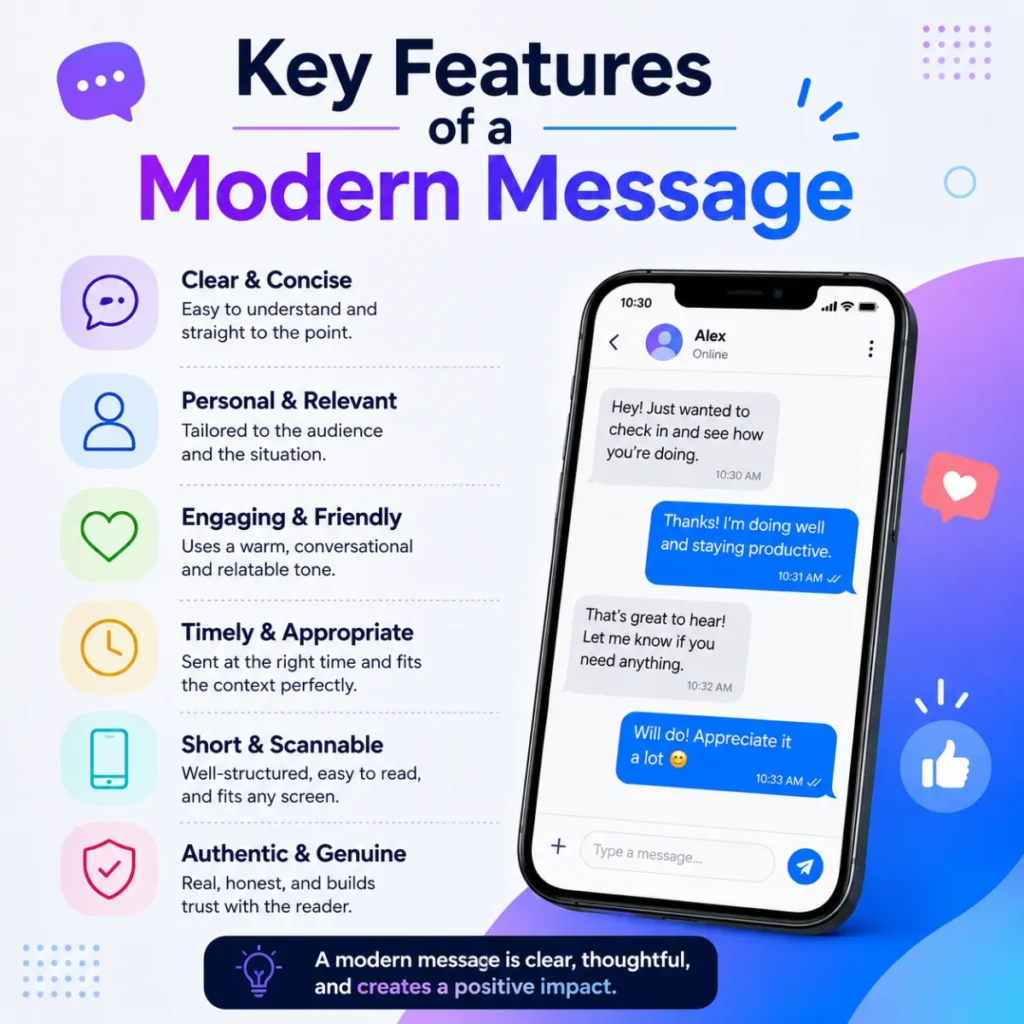
Understanding what makes a message “modern” requires looking at the features that set it apart from traditional SMS.
Rich Communication Services (RCS)
RCS is the modern upgrade to standard SMS. It supports read receipts, typing indicators, and the ability to send high-resolution photos and videos. This makes conversations feel more like chatting on social media platforms than traditional texting. According to recent reports, RCS device coverage has reached 96%, meaning most smartphones now support this technology.
Multimedia Integration
A modern message often includes more than just text. Emojis, GIFs, stickers, photos, and videos have become essential tools for expressing tone and emotion. These visual elements help bridge the gap that plain text leaves open for misinterpretation.
AI-Powered Conversations
Artificial intelligence is transforming messaging in unprecedented ways. Businesses are using AI to create multimodal conversations that seamlessly blend voice, text, and visual content. By 2030, 80 percent of enterprise applications are expected to be multimodal. WhatsApp, for example, has become a dominant channel for conversational AI, facilitating billions of interactions annually.
Platform-Specific Norms
The medium shapes the message. What works on Twitter (now X) won’t necessarily work on LinkedIn, and what’s appropriate in a WhatsApp group chat might not fly in an email. Understanding these platform-specific norms is essential for effective modern messaging.
The Language of Modern Messaging
A huge part of crafting a modern message is understanding the shorthand that has become its native language. Texting and social media have created a rich vocabulary of acronyms and slang that can make or break your message.
Verbs of Excellence
- “Ate”: Used to compliment someone for doing something perfectly or with exceptional style. Example: “You ate that outfit!”
- “Slay”: Similar to “ate,” meaning to do something exceptionally well. Example: “She slayed that presentation.”
- “Slaps”: Describes music, food, or anything that’s excellent. Example: “This new album slaps.”
- “GOAT”: Greatest Of All Time. Example: “You’re the GOAT for helping me.”
Nouns and Actions
- “Rizz”: Charisma, especially the ability to attract a romantic interest. Example: “He’s got mad rizz.”
- “Main character energy”: Acting like the protagonist of your own story. Example: “That main character energy is unmatched.”
- “Drip”: High-fashion style. Example: “Check out that drip.”
Expression and Emphasis
- “FR” / “FRFR”: For Real / For Real For Real. Used for emphasis. Example: “FRFR, that was the best meal I’ve ever had.”
- “IDC”: I Don’t Care. Example: “IDC what anyone says, I love it.”
- “JSP”: Just Playing. Used to clarify a joke. Example: “JSP, don’t take it seriously.”
- “Mid”: Average, unimpressive, or lower quality. Example: “The movie was mid, honestly.”
Common Texting Acronyms
AcronymMeaningExampleLOLLaughing Out Loud”LOL that was hilarious”BRBBe Right Back”BRB, getting coffee”TTYLTalk To You Later”Gotta go, TTYL”IMOIn My Opinion”IMO, that was the best episode”SMHShaking My Head”SMH, can’t believe that happened”TBHTo Be Honest”TBH, I wasn’t impressed”ICYMIIn Case You Missed It”ICYMI, check out this video”FWIWFor What It’s Worth”FWIW, I think you made the right call”
The Medium Is the Message
Media philosopher Marshall McLuhan famously coined the phrase “the medium is the message,” arguing that the way a message is delivered can be just as influential as its content. This concept is more relevant today than ever before.
Think about it: being broken up with via text feels completely different from an in-person conversation. The medium itself shapes the emotional weight of the news. Similarly, a 280-character tweet carries a different impact than a detailed email or a 60-second video.
The rapid-fire, bite-sized nature of content on platforms like TikTok and Instagram has reshaped our attention spans. It can even make serious topics feel trivial when sandwiched between unrelated, lighter content. This is why choosing the right medium for your message is just as important as choosing the right words.
How to Write a Modern Message That Connects
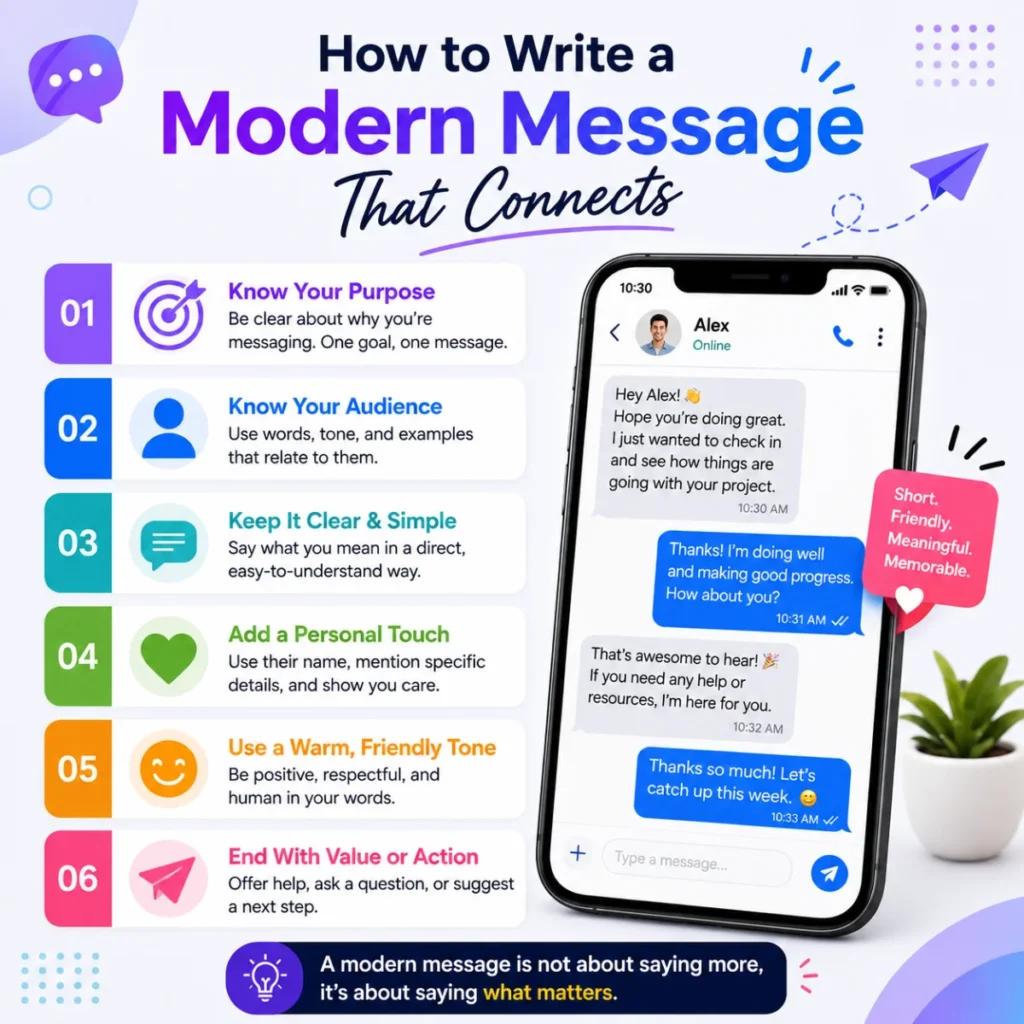
Crafting an effective modern message requires more than just knowing the slang. Here are practical tips to help you write messages that actually connect.
Know Your Audience
The most important rule of modern messaging is understanding who you’re talking to. A message to your best friend will look completely different from a message to your boss. Consider their age, their communication style, and your relationship with them.
- For friends: Use casual language, slang, emojis, and inside jokes.
- For colleagues: Keep it professional but not stiff. Use proper grammar and avoid excessive slang.
- For family: Match their communication style. Some families love emojis; others prefer plain text.
- For clients or customers: Be professional, clear, and concise. Use formatting to make your message easy to read.
Consider the Platform
Different platforms have different expectations:
- WhatsApp / iMessage: Casual conversations, quick responses, emojis okay.
- LinkedIn: Professional networking, complete sentences, minimal slang.
- Twitter (X): Short, punchy, hashtags, public-facing.
- Email: Formal or semi-formal, clear subject lines, structured.
- Instagram DMs: Visual-forward, casual, often starts with a reaction to a story.
Keep It Clear and Concise
In a world of information overload, brevity is a superpower. Get to the point quickly, but don’t sacrifice clarity for shortness. A confusing message is worse than a long one.
Use Emojis Strategically
Emojis can add tone and emotion to your message, but use them wisely. Too many emojis can make you seem unprofessional or immature. Too few can make your message feel cold. Find the right balance for your audience.
Know When to Use Voice
Sometimes, a voice message is better than a text. When the conversation is complex, emotional, or lengthy, voice notes can convey tone and nuance that text can’t capture. Many messaging apps now support voice notes for exactly this reason.
Respect Response Times
Modern messaging comes with unspoken expectations about response times. Some people reply instantly, others take hours or even days. Pay attention to how the other person responds and match their pace. If they take an hour to reply, don’t double-text them after two minutes.
Modern Messaging in Business
Business messaging is experiencing its biggest transformation in a decade, moving from simple two-way SMS to rich, AI-powered customer conversations. This shift is driven by consumer demand for richer, more interactive, and secure experiences.
The Rise of RCS in Business
With 96% RCS device coverage, businesses are rapidly deploying rich messaging to engage customers. This technology allows for branded and verified messaging, which builds trust with consumers who are increasingly skeptical of traditional SMS links. A business can now send interactive messages with images, buttons, and suggested replies—making the experience feel more like a conversation than a broadcast.
AI Chatbots and Customer Service
AI-powered chatbots are becoming the first line of customer support. These bots can handle routine inquiries instantly, freeing up human agents for more complex issues. The best implementations seamlessly escalate to a human when needed, creating a frictionless experience.
Personalization Matters
Modern consumers expect personalized messages. Generic blasts are increasingly ignored. Businesses that use data to personalize their messages—addressing the customer by name, referencing past purchases, or suggesting relevant products—see significantly higher engagement rates.
Modern Message Etiquette: Do’s and Don’ts
Do’s
- Do respond in a timely manner: Even a quick “Got it, will reply properly later” is better than silence.
- Do use proper grammar when appropriate: Not every message needs perfect grammar, but in professional contexts, it matters.
- Do match the other person’s energy: If they use emojis, you can too. If they’re formal, mirror that.
- Do proofread for important messages: Typos can undermine credibility.
- Do know when to take it offline: Some conversations are too serious or complex for text.
Don’ts
- Don’t send long paragraphs in a casual setting: Break up your text into smaller chunks.
- Don’t expect instant replies: People have lives outside their phones.
- Don’t use excessive abbreviations: Not everyone knows what “JSP” or “FRFR” means.
- Don’t send sensitive news via text: Bad news should be delivered in person or at least via phone call.
- Don’t double-text excessively: If they haven’t replied, give them space.
FAQs Sction
What is a modern message?
A modern message is any form of communication that goes beyond traditional plain-text SMS. It includes rich features like emojis, GIFs, images, videos, read receipts, and typing indicators. It also encompasses the cultural and generational norms that shape how we communicate today.
What does “mid” mean in modern texting?
“Mid” is a slang term used to describe something average, unimpressive, or of lower quality. For example, if someone says a movie was “mid,” they mean it wasn’t good or bad—just forgettable.
What does “ate” mean in modern slang?
“Ate” is a verb used to compliment someone for doing something perfectly or with exceptional style. If someone posts a picture and a friend comments “you ate,” it means they think the look is flawless.
What is RCS messaging?
RCS (Rich Communication Services) is the modern upgrade to traditional SMS. It supports features like read receipts, typing indicators, high-resolution images, and interactive buttons—making it more like a chat app experience.
What does “rizz” mean?
“Rizz” is slang for charisma, especially the ability to attract a romantic interest. It’s short for “charisma” and has become a popular term on platforms like TikTok.
Why is my message green instead of blue on iPhone?
Green bubbles on iPhone mean your message was sent as SMS instead of iMessage. This usually happens because iMessage is not available on the recipient’s device—perhaps they’re using Android, have iMessage turned off, or have poor internet connectivity.
What does “the medium is the message” mean?
This phrase, coined by media philosopher Marshall McLuhan, means that the way a message is delivered can be just as influential as its content. For example, being broken up with via text feels completely different from an in-person conversation because the medium shapes the emotional weight of the news.
How do I write a modern message for business?
Keep it professional but conversational. Use the customer’s name, reference past interactions if possible, and make it easy for them to respond. Consider using RCS features for a richer experience, and always maintain a helpful tone.
Conclusion
The modern message is a constantly evolving concept. It’s shaped by technological advancements like RCS and AI, which are making our communications more interactive and personalized. It’s also defined by the cultural and generational trends that give life to new slang, from “slay” and “mid” to “rizz” and “GOAT.” Understanding these elements is essential for communicating effectively in today’s digital landscape.
Ultimately, the best modern messages are those that connect—that make the recipient feel seen, heard, and understood. Whether you’re texting a friend, emailing a colleague, or engaging with a brand, the principles remain the same: know your audience, choose the right medium, and always communicate with intention. In a world of constant notifications and overflowing inboxes, a well-crafted message stands out. Make yours count.

Hamid Mehmood is a passionate content creator dedicated to making words, messages, and online expressions easy to understand. He enjoys creating clear, helpful content that helps readers discover meanings and communicate with confidence.