

Finding the right words when someone you care about is grieving can feel overwhelming. You want to offer comfort, but the fear of saying something wrong or sounding insincere often leaves people frozen, unsure of how to reach out. This is a common experience—most people struggle with writing sympathy messages, which is precisely why having a clear guide can make all the difference.
This comprehensive guide covers everything you need to know about crafting meaningful sympathy messages. We’ll explore what a sympathy message is, how it differs from a condolence message, when to send one, and provide practical examples for various relationships and situations. More importantly, we’ll highlight what to avoid, helping you steer clear of well-intentioned phrases that can inadvertently cause more pain during an already difficult time.
What Is a Sympathy Message?
A sympathy message is an expression of compassion, sorrow, or concern for someone who is experiencing hardship, grief, or misfortune. Unlike a condolences message, which specifically relates to death, sympathy can be offered in a wider range of situations—including illness, job loss, divorce, or any significant life challenge.
Sympathy involves feeling compassion for another person’s suffering without necessarily sharing their exact experience. You acknowledge their pain and offer support, even if you haven’t been through the same situation yourself. This emotional distance is what distinguishes sympathy from empathy—empathy means feeling what the other person is feeling, while sympathy means feeling for them.
Sympathy vs. Condolences: Understanding the Difference
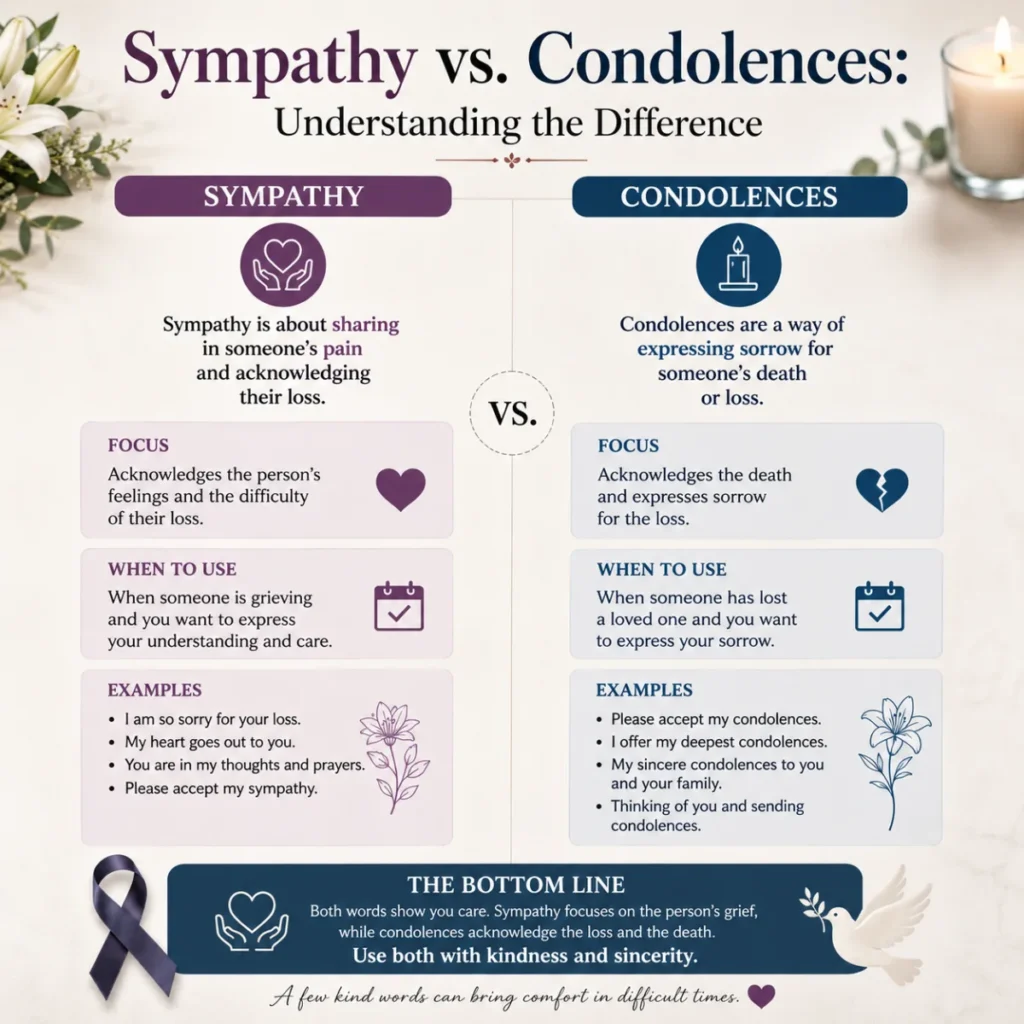
While people often use these terms interchangeably, there is a meaningful distinction worth understanding.
AspectSympathy MessageCondolences MessageDefinitionExpression of compassion or concern for someone’s hardshipA specific message expressing sympathy following a deathScopeBroad—covers illness, job loss, divorce, grief, and other challengesNarrow—typically reserved for bereavement and lossUsage“I have sympathy for what you’re going through””Please accept my condolences”EmotionFeeling compassion for someoneSharing in someone’s grief or sorrow
The distinction is subtle but practical: use “sympathy” when referring to your feelings of concern, and use “condolences” when referring to a message specifically for someone who has lost a loved one.
When to Send a Sympathy Message
A sympathy message is appropriate in many situations beyond death, including:
- Serious illness or injury: When someone is facing a health crisis or recovering from surgery
- Breakup or divorce: Relationship endings can be a profound loss
- Job loss or career setback: Losing employment can trigger grief and uncertainty
- Miscarriage or pregnancy loss: This is a real and painful loss that deserves recognition
- Loss of a pet: Many people consider their pets family members
- Significant disappointment: Missing out on a promotion, failing an exam, or other major setbacks
Sympathy is mostly used to express understanding when another person experiences bad luck or misfortune. Recognizing these moments with a thoughtful message can make a significant difference.
Core Principles of Writing a Sympathy Message
Writing a meaningful sympathy message doesn’t require poetic talent—it requires sincerity. Here are the key principles to follow:
Be Sincere Above All
Your message doesn’t have to be perfect; it just has to be kind. As etiquette experts note, people often overthink and worry about expressing a sincere gesture of condolence. As long as you communicate genuine empathy and support, your words will be appreciated. If you’re concerned, keep these points in mind:
- Be sincere and your words will ring true
- Keep it short and sweet
- Strike a balance between formal and casual—this isn’t the time to be too silly
- Offer support without centering yourself in the offer
Follow a Simple Structure
When writing a sympathy message, consider this three-part framework:
- Start with a greeting or express sympathy: “I’m so sorry to hear about…”
- Share a memory or personal thought: “I remember when…”
- Offer support: “I’m bringing dinner Thursday” (specific offers work better than vague ones)
Make It Personal
If it fits, share something personal—a small memory, a detail about the person they lost, or a brief note about how you’re holding them in your thoughts. Using the person’s name and sharing a specific memory makes the message feel more intimate and meaningful. Just ensure it’s about their loss, not yours.
Be Specific with Support
A grieving person is rarely in a position to delegate tasks. “Let me know if you need anything” is essentially an empty gesture—the bereaved is too busy and in too much pain to think of things for you to do. Instead, offer something concrete:
- “I’m bringing dinner on Thursday”
- “I can pick up your kids from school this week”
- “I’m happy to walk your dog while you rest”
Sympathy Message Examples for Different Situations
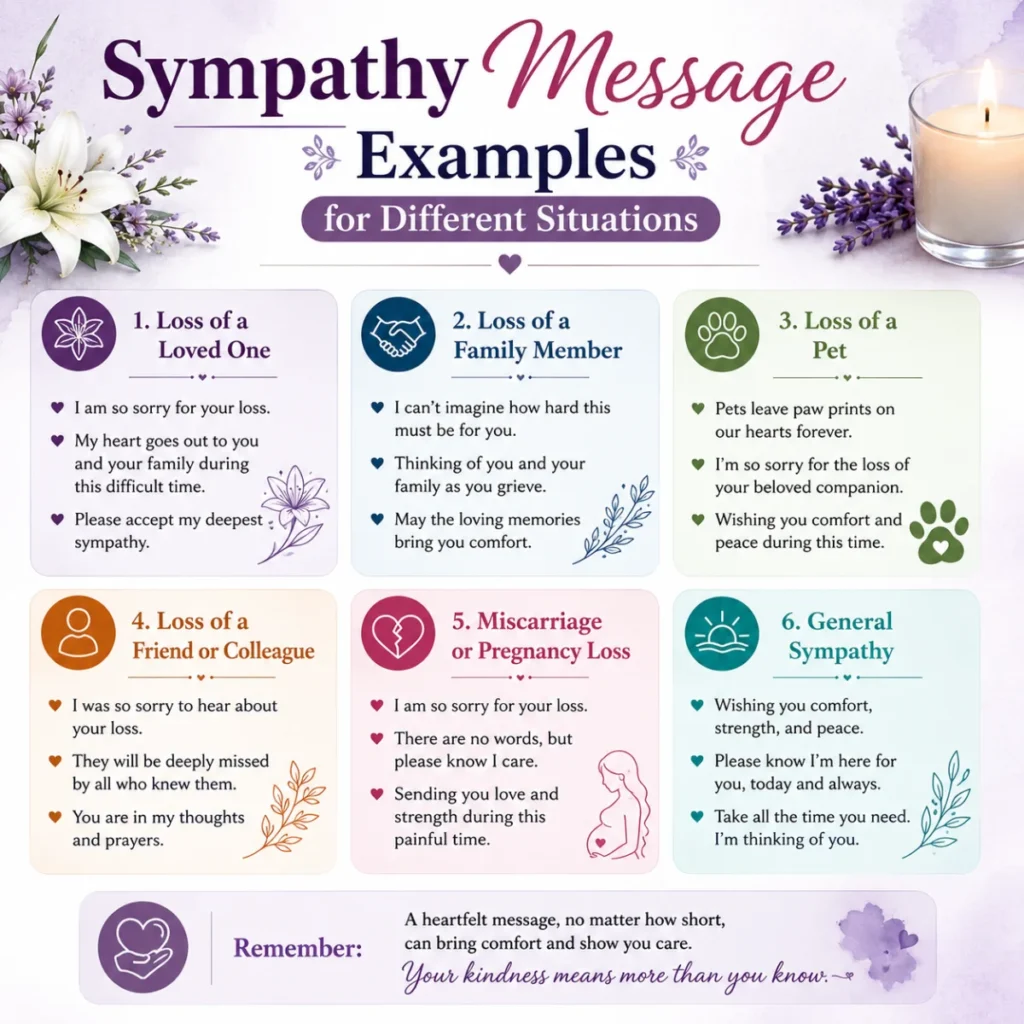
Short Sympathy Messages
These work well for texts, social media, or quick notes:
- “I’m so sorry. I’m here for whatever you need.”
- “My heart is with you. I love you, and I’m not going anywhere.”
- “There are no words. Just know I’m here.”
- “I’m so sorry for your loss. You’re in my thoughts.”
- “Thinking of you during this difficult time.”
For a Close Friend or Family Member
When the person is close to you, your message can be more personal:
- “I’ve been thinking about you constantly. There’s nothing I can say to make this better, but I want you to know I’m here. Call me at 3 a.m. if you need to. I mean it.”
- “Losing someone you love this much is devastating. I won’t pretend to understand your pain, but I’ll sit with you in it for as long as you need.”
- “I don’t have the right words, and I’m not going to pretend I do. I’m just here—for the hard days, the quiet ones, and whenever you need someone to sit with you in this.”
For Illness or Injury
These messages acknowledge hardship while offering hope:
- “Thinking of you and hoping each day brings a little more healing and a little less pain.”
- “Wishing you strength, rest, and small comforts.”
- “You’ve been through a lot. I hope you’re being extra kind to yourself.”
- “No pressure to respond. I’m just sending care your way.”
For a Breakup or Divorce
Relationship endings can feel like a death in their own way:
- “This kind of heartbreak is its own kind of grief. I’m here if you want to talk.”
- “You don’t need to explain anything. I’m in your corner no matter what.”
- “Breakups suck, even when they’re the right decision.”
- “It’s okay if you don’t feel like yourself right now. You’re still you, and you’re still loved.”
For the Loss of a Pet
Validating this bond is important—many consider pets family:
- “I was so sorry to hear about your loss. I know how much [Pet’s name] meant to you and that you gave them a wonderful life.”
- “Losing a pet is always so difficult. Sending you comfort and love as you remember your dear friend.”
- “Benny was such a good dog. So sorry you’ve had to say goodbye to him.”
For Miscarriage or Pregnancy Loss
This loss deserves recognition and sensitivity:
- “The love you felt for your baby-to-be was real, and so is the loss you’re experiencing. I hope you can be gentle with yourself and honor whatever you’re feeling right now.”
- “I can’t begin to understand all you’re feeling right now, but I know it can’t be easy. I wish you didn’t have to go through a loss like this.”
- “Just wanted to remind you that there was nothing you could or should have done differently. Sometimes these things just happen. I’m sorry it had to happen to you.”
What to Avoid in Sympathy Messages
Many well-intentioned phrases can actually cause more pain. Here are common pitfalls to avoid:
Avoid Minimizing or Reframing
Don’t rush to fix or reframe the situation. Phrases like these can unintentionally shut down grief:
- “At least they’re not suffering anymore”
- “Everything happens for a reason”
- “They lived a long life” (this doesn’t help the pain someone is experiencing now)
- “It was a blessing in disguise” (when someone has lost someone, it doesn’t feel like a blessing)
Avoid Making It About You
This is a time to center the grieving person, not your own experience:
- “I know exactly how you feel” (no two experiences of grief are the same)
- Don’t vent feelings or regrets that are too personal or about oneself
Be Careful with Religious Sentiments
Unless you’re sure the family shares those beliefs, avoid religious statements like:
- “They’re in a better place now”
- “It’s part of God’s plan”
- To non-believers, these sentiments might sound empty and make them feel worse
Avoid Clichés
Certain clichés can feel dismissive:
- “Stay strong” or “You’ll get through it” (may undermine their feelings and make them feel pressured to hide their emotions)
- “He was gone too soon” (serves as a painful reminder)
- Phrases that suggest the person brought misfortune on themselves (e.g., “You brought it on yourself,” “Well, it is your fault”)
How Sympathy Messages Are Used in Different Contexts
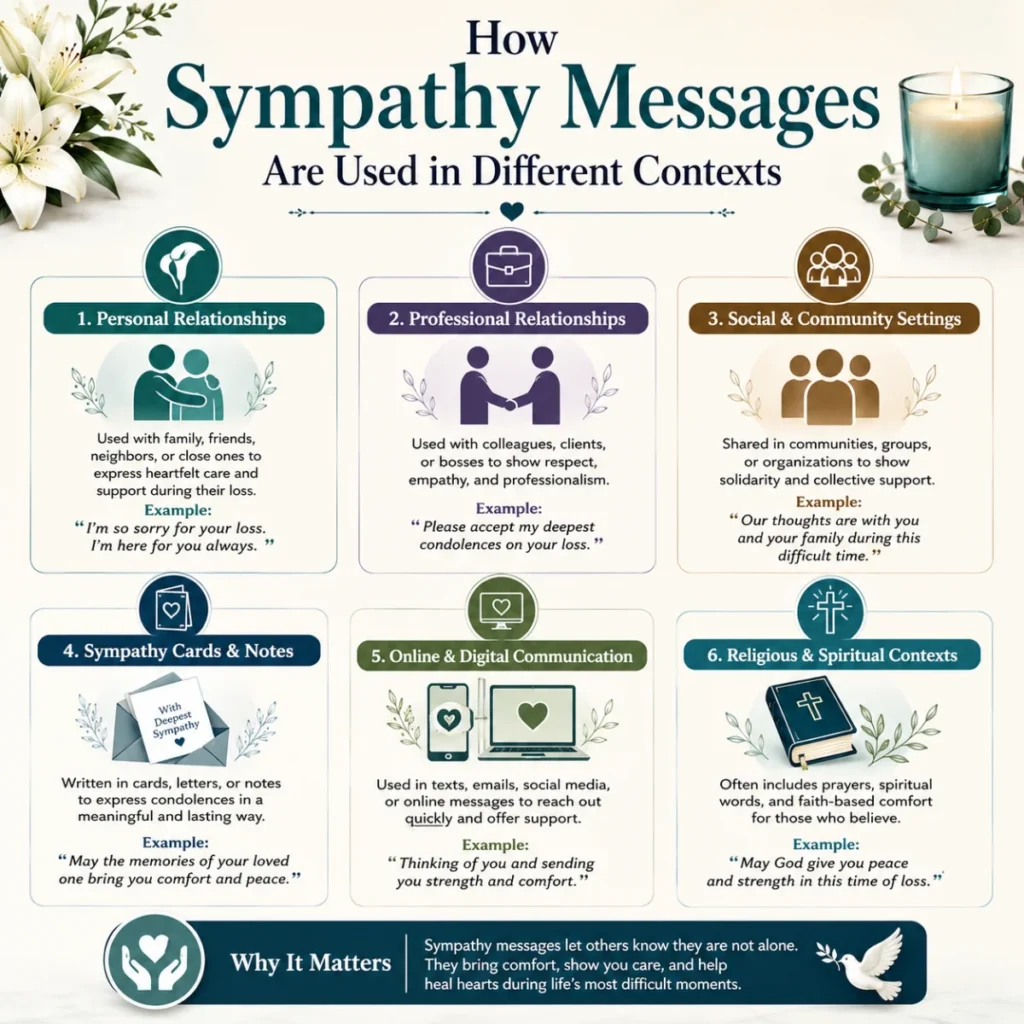
Written Sympathy Notes
Unlike spoken words at a funeral or a eulogy, a written message allows you to express empathy, share memories, and offer comfort in a lasting and personal way. Families can revisit these messages during their grief journey. Send the note as soon as you hear about the loss—the first days and weeks are often the worst.
Sympathy Card Messages
If you’re sending flowers with a sympathy card, pair them with a thoughtful message:
- “May these flowers express what words never could. Sending you my deepest sympathies.”
- “I hope you find these flowers as beautiful as [Name’s] spirit and know I’m thinking of you in this sad time.”
Sympathy Messages for Colleagues
For workplace relationships, strike a professional yet caring tone:
- “On behalf of the entire team, please accept our deepest sympathies. We are all thinking of you.”
- “I was deeply saddened to hear about your loss. Please know you and your family are in my thoughts.”
FAQs Section
What is the difference between sympathy and empathy?
Sympathy is feeling compassion or sorrow for someone else’s hardship—you feel for them. Empathy, on the other hand, involves understanding and sharing the feelings of another person—you feel with them. Sympathy acknowledges someone’s pain from a distance, while empathy involves stepping into their experience.
When should I send a sympathy message?
Send a sympathy message as soon as you hear about someone’s loss or hardship. The first days and weeks are often the worst. However, if you miss that window, late is better than never—grieving people will appreciate words of support and care long after their loss. You might acknowledge the delay: “I’m so sorry for not reaching out sooner, but you have been in my thoughts constantly.”
What should I say in a sympathy text message?
Keep sympathy texts short and sincere. Good options include: “I’m so sorry. I’m here for you,” or “Thinking of you during this difficult time.” For a close friend, you might say: “I’m here for you always. If you want to talk or just need someone to listen, just say the word”.
Is “I know how you feel” appropriate to say?
No, it’s generally best to avoid this phrase. Even with good intentions, it can feel dismissive because no two experiences of grief are the same. Instead, try: “I can’t imagine what you’re going through, but I’m here for you”.
Should I send a sympathy message if I didn’t know the deceased person well?
Yes, you can still send a sympathy message. Focus your message on the person you are writing to. You might say: “I didn’t have the privilege of knowing [Name], but I know how much they meant to you, and my heart goes out to you”. The message is for the living, not the deceased.
Can I send a sympathy message after a breakup?
Yes, breakups and divorces can be a profound loss. Messages like “This kind of heartbreak is its own kind of grief. I’m here if you want to talk” acknowledge the pain without minimizing it.
How can I offer help without being vague?
Be specific. Instead of “Let me know if you need anything,” offer something concrete: “I’m bringing dinner on Thursday” or “I can walk your dog while you rest”. Grieving people are often too overwhelmed to think of tasks to delegate.
What’s the best structure for a sympathy card message?
Follow this simple structure: start by expressing condolences (“I’m so sorry for your loss”), share a memory or personal thought if appropriate, and offer specific support or assistance.
Conclusion
The most important thing to remember when writing a sympathy message is that sincerity matters more than perfection. It’s natural to worry about saying the wrong thing, but your effort to reach out and show support is what truly counts. Keep your message simple, be honest, and offer genuine support. Even if you can’t find the perfect words, your presence and care will be felt.
Grief and hardship are deeply personal experiences, and there is no single “right” way to offer comfort. What matters is that you try, that you show up, and that you let the person know they are not alone. The simple act of reaching out can be a lifeline for someone navigating some of the darkest days of their life.

Hamid Mehmood is a passionate content creator dedicated to making words, messages, and online expressions easy to understand. He enjoys creating clear, helpful content that helps readers discover meanings and communicate with confidence.