
Finding the right words when someone is grieving can feel like navigating a minefield. You want to offer comfort, but often, a simple text or a few lines in a card feels insufficient. The fear of saying something wrong or coming across as insensitive can leave you paralyzed, unsure of how to reach out. This is completely normal—most people struggle with finding the right way to express sympathy, which is precisely why having a clear guide can make all the difference.
This guide provides everything you need to know about crafting meaningful condolences messages, ensuring your words offer genuine support during a difficult time. We’ll explore what a condolences message is, when it’s appropriate to send one, and how to tailor your message for various relationships and situations. More importantly, we’ll look at what to avoid, helping you steer clear of common phrases that can inadvertently cause more pain. Whether you’re sending a text, writing a card, or posting on social media, you’ll find practical advice that works.
What Is a Condolences Message?
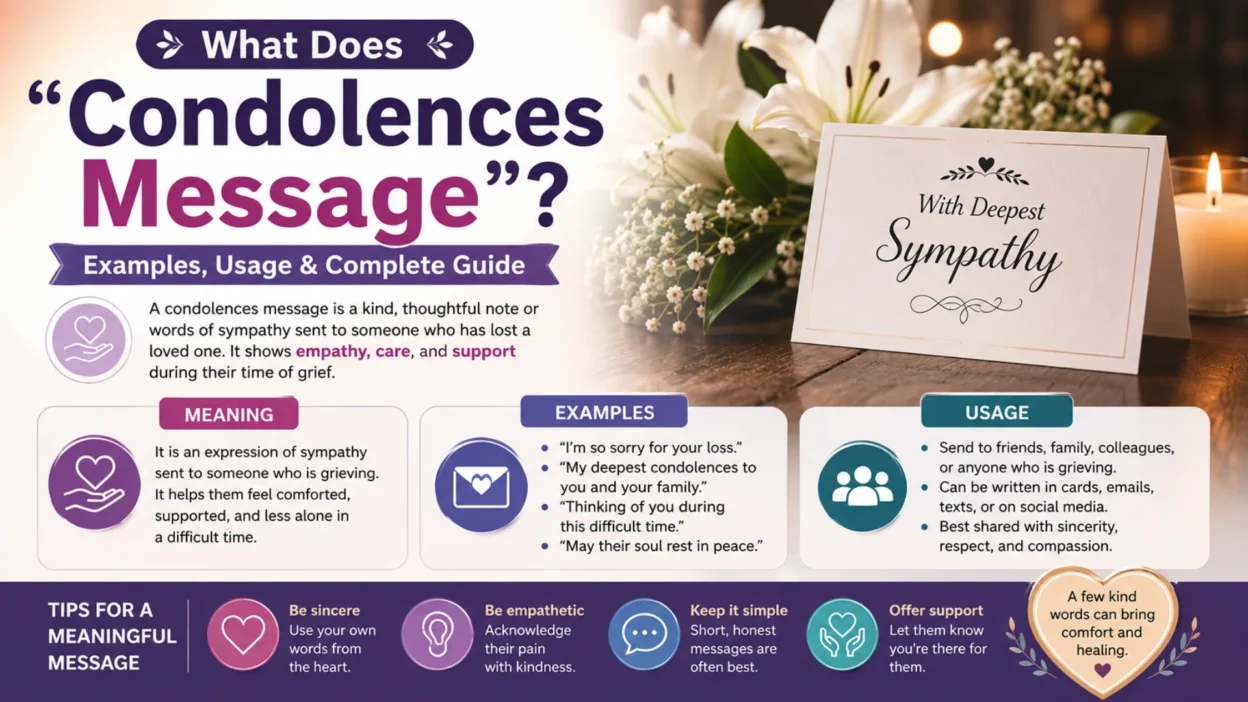
A condolences message is an expression of sympathy for someone experiencing pain, typically following the death of a loved one or another significant misfortune. The word itself comes from the Latin con (with) and dolore (sorrow), essentially meaning to share in someone’s grief. In practice, it’s a formal or informal way to communicate that you are thinking of the person and are saddened by their loss.
It’s interesting to note that the word is more commonly used in its plural form, “condolences,” as in “please accept my condolences.” This linguistic habit is similar to sending someone our “regards” or “best wishes,” which is often thought to make the sentiment feel more comprehensive. Offering your condolences is an active way of showing support, an attempt to bridge the distance that loss creates.
When to Send a Condolences Message
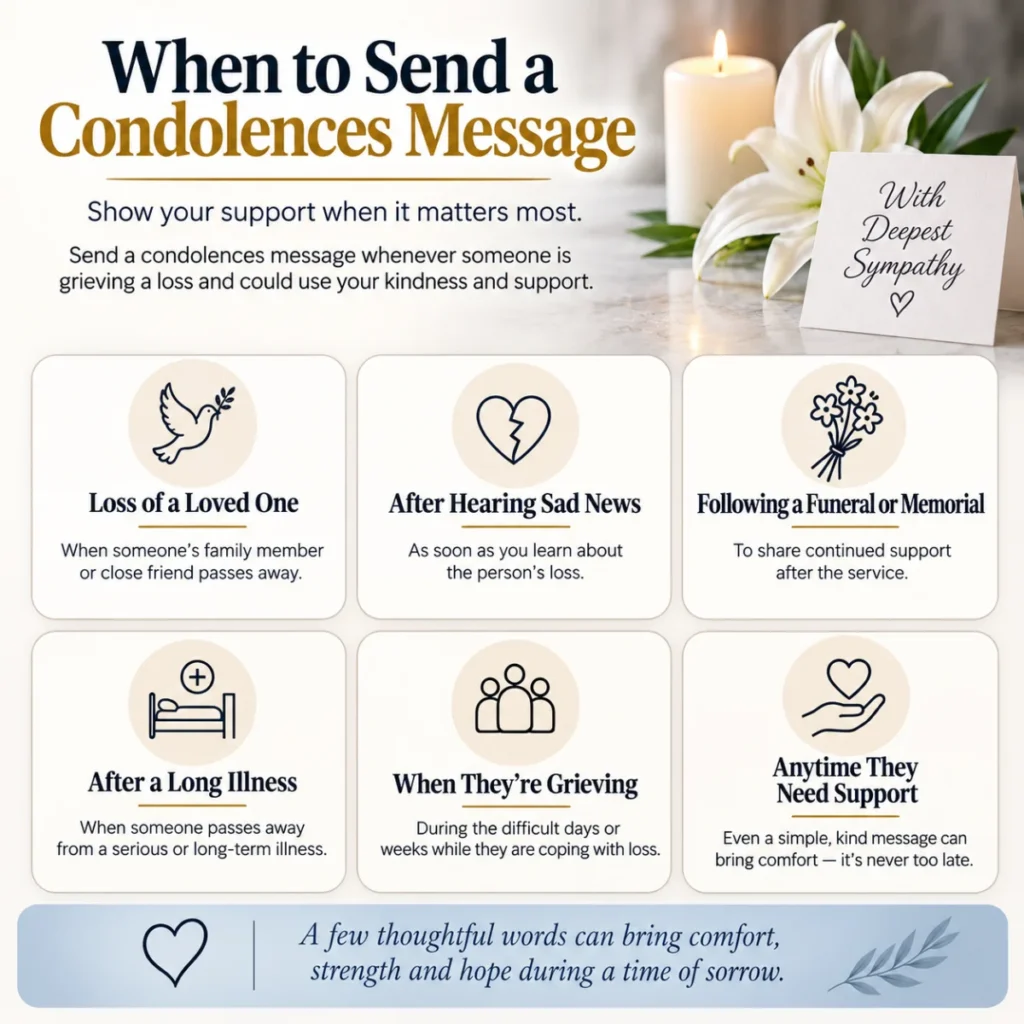
While a letter or a sympathy card is often seen as the gold standard for offering condolences, there are many instances where a text message or a social media post is entirely appropriate. A message of support, regardless of the medium, can show care and compassion.
Here are a few situations where it’s certainly appropriate to send a condolence message, especially via text:
- You are unable to make a phone call or visit in person: Distance or other commitments can make a physical visit impossible. A message ensures you still reach out.
- You don’t know the person well: If you are an acquaintance or a colleague, a message is often less intrusive and more appropriate than a phone call.
- The person seems overwhelmed: Grief often comes with a flood of tasks and emotions. A text allows them to read your message and respond when they have the energy, without the pressure of a live conversation.
- It is a follow-up after the funeral: Often, the most isolating time comes after the initial rush of support. A gentle check-in text in the weeks following a memorial can be a profound comfort.
How to Write a Meaningful Message: Structure and Examples
What should you actually say? A useful way to approach writing a condolences message is to follow a simple three-part structure:
- Opening: Gently acknowledge the loss.
- Middle: Share a personal connection or memory.
- Closing: Offer support.
This framework helps to move beyond generalities and create a message that feels sincere and personal.
Short and General Sympathy Messages
Keeping it simple is often best, especially in the immediate aftermath. These messages are suitable for most situations, particularly if you aren’t sure what to write. Aim for a balance between formal and casual, and avoid using overly silly or lighthearted language.
- “My heart goes out to you and your family.”
- “I was so saddened to hear about your loss. You are in my thoughts.”
- “Sending you strength and love during this difficult time.”
- “Please accept my sincere condolences. I’m thinking of you all.”
For a Close Friend or Family Member
When the person is close to you, your message can be more personal. Acknowledge your shared bond and let them know you are there for them. You can be more direct in your offer of support.
- “I can’t imagine what you’re going through, but I want you to know I’m here for you. If you want to talk, or just need someone to sit in silence with, I’m only a text away.”
- “I’m here for you always. I wish I could be there in person. Just say the word, and I’ll be there.”
- “I’m so grateful I had the chance to know [Name]. They were so special, and I’ll miss them dearly.”
For a Colleague or Professional Acquaintance
A message to a colleague should strike a tone that is professional yet caring. It’s important to acknowledge the person’s humanity and offer support while respecting workplace boundaries.
- “On behalf of the entire team, please accept our deepest sympathies. We are all thinking of you during this time.”
- “I was deeply saddened to hear about your loss. Please know you and your family are in my thoughts.”
- “We are so incredibly sorry for your loss. We’re wishing you and your family courage and peace.”
For the Loss of a Pet
Losing a pet is a profound loss, and it’s important to acknowledge the pain. Many people consider their pets to be family members. A message that validates this bond can be a great source of comfort.
- “I was so sorry to hear about your loss. I know how much [Pet’s name] meant to you and that you gave them a wonderful life.”
- “Losing a pet is always so difficult. Sending you comfort and love as you remember your dear friend.”
- “Thinking of you and your family. I know how much you loved [Pet’s name], and I’m here if you need anything.”
Sharing a Memory or a Personal Thought
The most powerful messages often include a specific memory or observation. This part of the message helps the grieving person feel that their loved one is remembered. As one expert notes, using the person’s name and sharing a specific memory can make a condolence note feel deeply personal.
- “I will never forget the time [Name] spent an afternoon helping me fix my car. They were always so selfless.”
- “We still laugh about the time [Name] brought frogs into the house. Their mischievous grin is something I’ll always remember.”
- “I always admired the incredible bond you shared. It was truly special to witness.”
Offering Practical and Specific Support

The closing of your message is the perfect place to offer help. Often, people will say “let me know if you need anything,” but a bereaved person is rarely in a position to delegate tasks. A more effective approach is to offer something specific.
Here are some ideas:
- Do something concrete: “I’m bringing over dinner on Tuesday evening. I’ll text you when I’m outside, so no need to worry about visiting.”
- Offer a practical service: “I can pick up your kids from school on Wednesday and Friday this week.”
- Give them space to decide: “Would you prefer a phone call or a text check-in? I’m happy to do whatever is easiest for you.”
- Offer a quiet presence: “I can come over for a cup of tea tomorrow, and we don’t have to talk. We can just sit.”
This shows that you’re thinking of their practical needs and are ready to act, which can be a tremendous relief.
What to Avoid: Common Mistakes
Many families have shared that certain well-intentioned phrases can be hurtful. Here are some things to avoid when sending a condolences message:
- Don’t give advice: Avoid phrases like “Everything happens for a reason” or “At least they’re in a better place.” These can feel dismissive of the person’s immediate pain.
- Don’t try to relate by making it about you: Even if you have experienced a similar loss, this is a time to center the grieving person, not your own experience. Avoid “I know exactly how you feel.”
- Don’t ask too many questions: A grieving person may not have the energy to answer questions. It’s better to offer support without demanding a response. Give them space, and they will share if and when they can.
- Be cautious with social media: Only post publicly if the person has already shared the news on that platform. Always respect their privacy.
The Difference Between Condolences and Sympathy
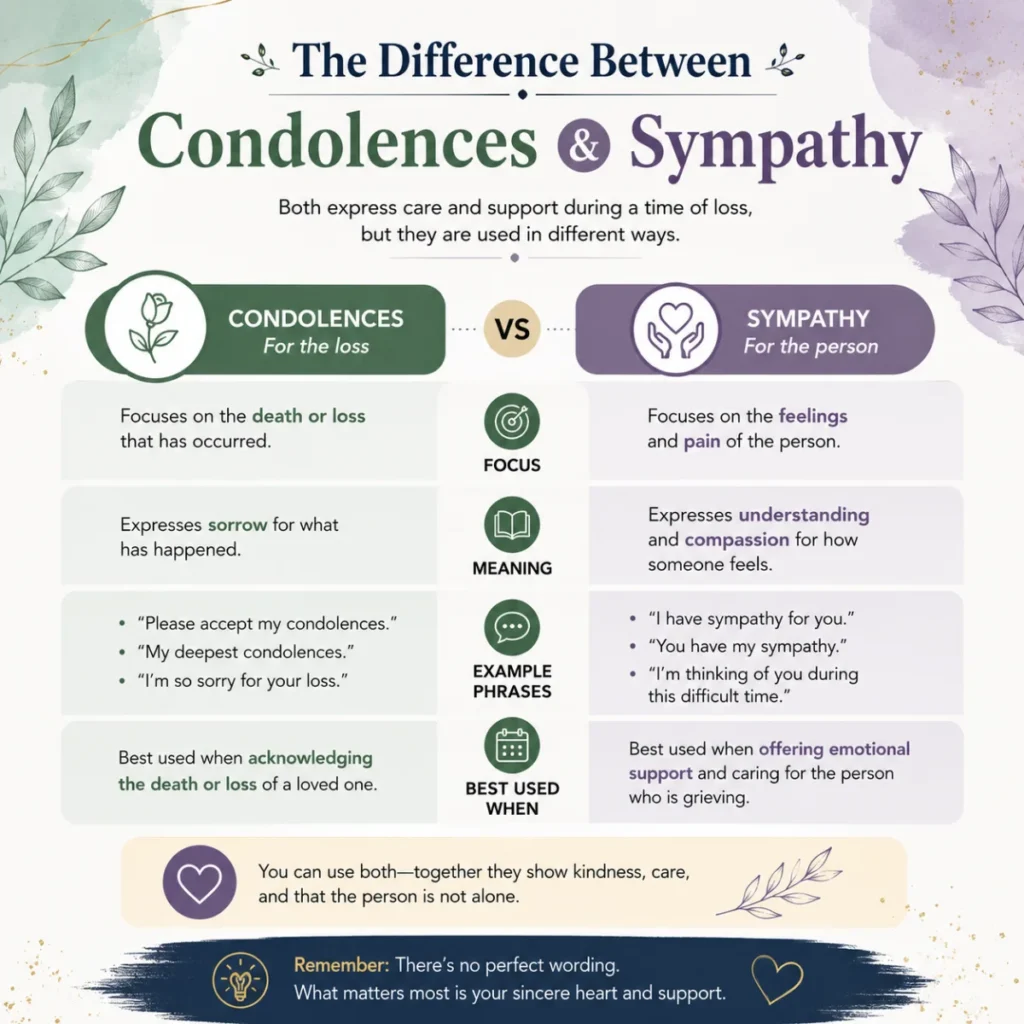
While the terms are often used interchangeably, there is a subtle distinction. Condolences are generally a specific expression of sympathy, often in the context of a death. Sympathy is a broader term that refers to a general feeling of pity and sorrow for someone else’s misfortune. In practice, a “condolence message” and a “sympathy card” are often the same thing, serving the same purpose. The aim of both is to show you care.
How Condolences Are Used in Different Contexts
The core meaning remains the same—a shared expression of sorrow—but the method and tone can vary. A message to a grieving friend will be more personal and informal, while a formal letter of condolence may be appropriate for a business associate or as part of diplomatic protocol. Even in formal political or diplomatic communications, the core principle of expressing sympathy and solidarity remains.
FAQs
How do you start a condolences message?
Start by gently acknowledging the loss and the person’s grief. A simple and sincere opening like, “I was so saddened to hear about your loss” or “My heart is with your family” is usually the most effective approach. The key is to be genuine and avoid overcomplicating your opening words.
Can I send a condolence by text message?
Yes, it is entirely acceptable to send a condolence by text, especially when an in-person visit isn’t possible, you don’t know the person well, or when the recipient might be overwhelmed. Ensure your message is sincere and thoughtful. The medium matters less than the sentiment behind your words.
Is it okay to say “I know how you feel”?
No, it’s generally best to avoid this phrase. Even with good intentions, it can feel dismissive. No two experiences of grief are the same. Instead, you can say, “I can’t imagine what you’re going through, but I’m here for you.” This acknowledges their unique pain without making assumptions.
Should I send a message after the funeral?
Yes. The weeks and months after the funeral can be the loneliest. A simple message like, “I’m thinking of you today and hoping you’re okay” can be a great comfort. This follow-up shows that your concern isn’t just a one-time gesture but ongoing support.
How can I offer help in a condolence message?
Be specific. Instead of saying “let me know if you need anything,” offer a concrete action. For example, “I’m bringing dinner for your family tomorrow evening” or “I can walk your dog on Saturday.” Specific offers are much easier for a grieving person to accept.
What if I don’t know the deceased person well?
Focus your message on the person you are writing to. You can say something like, “I didn’t have the privilege of knowing [Name], but I know how much they meant to you, and my heart goes out to you.” This keeps the focus on supporting your friend or colleague.
How long should a condolence message be?
There’s no strict rule, but shorter messages are often more effective. A few sincere sentences are usually better than a long, rambling note. The quality of your words matters far more than the quantity.
Is it appropriate to send condolences on social media?
Only if the person has already shared the news publicly on that platform. Always respect their privacy. A private message is generally more personal and thoughtful than a public post.
Conclusion
The most important thing to remember when sending a condolence message is that sincerity matters more than perfection. It’s natural to worry about saying the wrong thing, but your effort to reach out and show support is what truly counts. Keep your message simple, be honest, and offer genuine support. Even if you can’t find the perfect words, your presence and care will be felt.
Grief is a deeply personal journey, and there is no single “right” way to offer comfort. What matters is that you try, that you show up, and that you let the person know they are not alone. As one guide aptly puts it, “Keep it short and sweet,” and your words will ring true. The simple act of reaching out can be a lifeline for someone navigating the darkest days of their life.

Hamid Mehmood is a passionate content creator dedicated to making words, messages, and online expressions easy to understand. He enjoys creating clear, helpful content that helps readers discover meanings and communicate with confidence.