

In the world of Dungeons & Dragons, communication can be just as important as combat. The Message cantrip is one of the most versatile and underrated spells in 5th Edition, allowing you to send secret whispers across a room or through walls without anyone else hearing a word. It’s a magical radio that turns your whispered voice into a direct mental transmission to another creature.
This guide covers everything you need to know about Message 5e, from its exact rules and limitations to creative ways players and DMs can use it for stealthy communication, cunning plans, and unforgettable moments at the table.
What is Message 5e?
Message is a Transmutation cantrip that lets you send a short, whispered message to a creature within 120 feet. The target hears your words as if you were whispering directly in their ear, and only they can hear it. They can also whisper a reply that only you can hear, making it a two-way communication tool.
This spell isn’t true telepathy—you actually have to whisper the words you want to convey. However, the magic ensures that your whisper travels to the target instantly, bypassing normal sound barriers.
Message 5e Spell Details
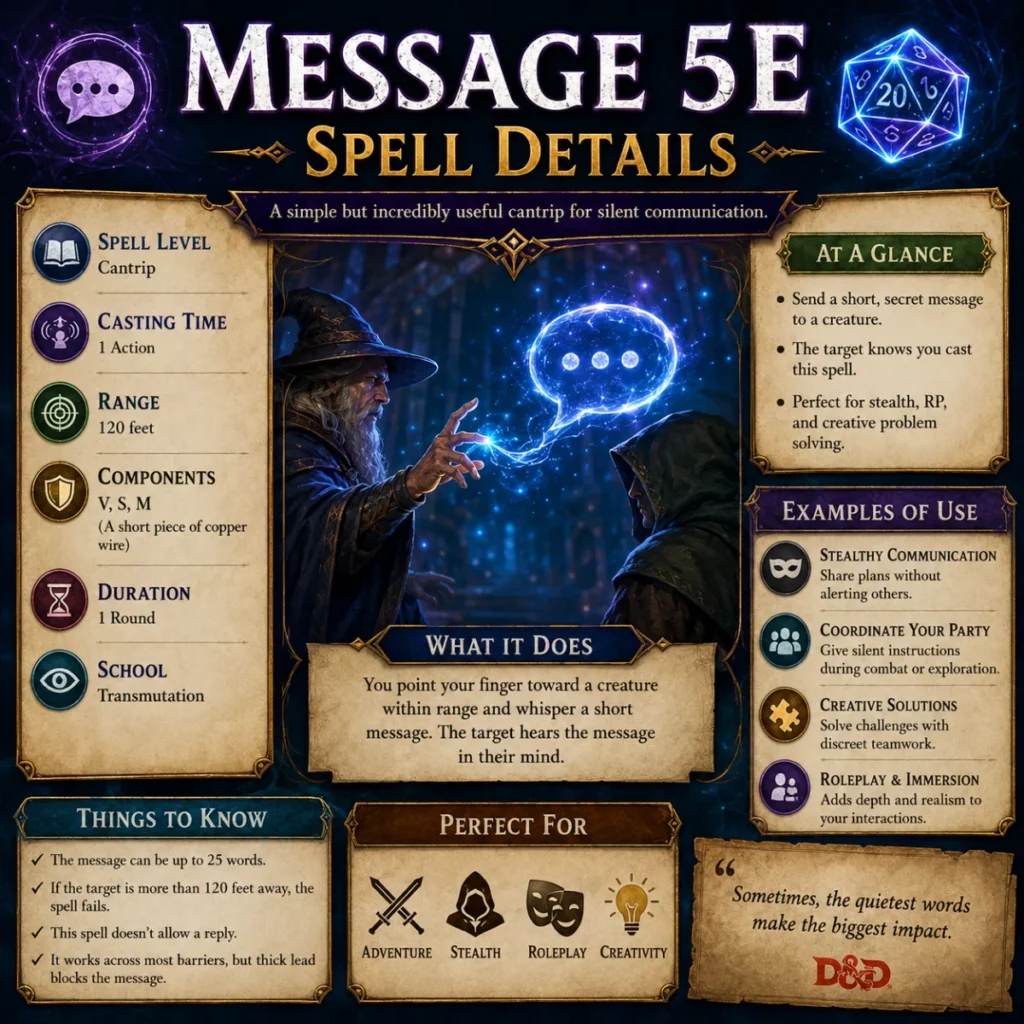
Here are the complete spell statistics for Message as they appear in the 5th Edition rules.
Message is a cantrip, meaning it’s a 0-level spell that doesn’t cost a spell slot. You can cast it as many times as you like. It belongs to the Transmutation school of magic. The casting time is 1 action, which makes it quick and easy to use in any situation.
The spell has a range of 120 feet, giving you plenty of distance to communicate with allies or enemies. It requires Verbal, Somatic, and Material components. You need to whisper, point your finger toward the target, and have a short piece of copper wire (or an arcane focus can replace the material component). The duration is 1 round.
The classes that can learn Message include Artificer, Bard, Sorcerer, and Wizard. In the 2024 rules, Druids also gain access to this cantrip.
How Message Works
Casting the Spell
When you cast Message, you point your finger toward a creature within range and whisper your message. The target (and only the target) hears your words. They can then whisper a reply that only you can hear.
Important Mechanics
The spell has some important rules that shape how it can be used.
It travels around obstacles: Message doesn’t need a straight line of sight. It can travel freely around corners, through openings, and even through solid objects under certain conditions. This makes it incredibly versatile in dungeons and complex environments.
It’s blocked by certain materials: The spell cannot pass through magical silence, 1 foot of stone, 1 inch of common metal, a thin sheet of lead, or 3 feet of wood. This limitation matters when trying to communicate through thick walls or dungeon barriers.
You need to know the target: You can cast Message through solid objects only if you are familiar with the target and know they are beyond the barrier.
Key Differences: 2014 vs 2024
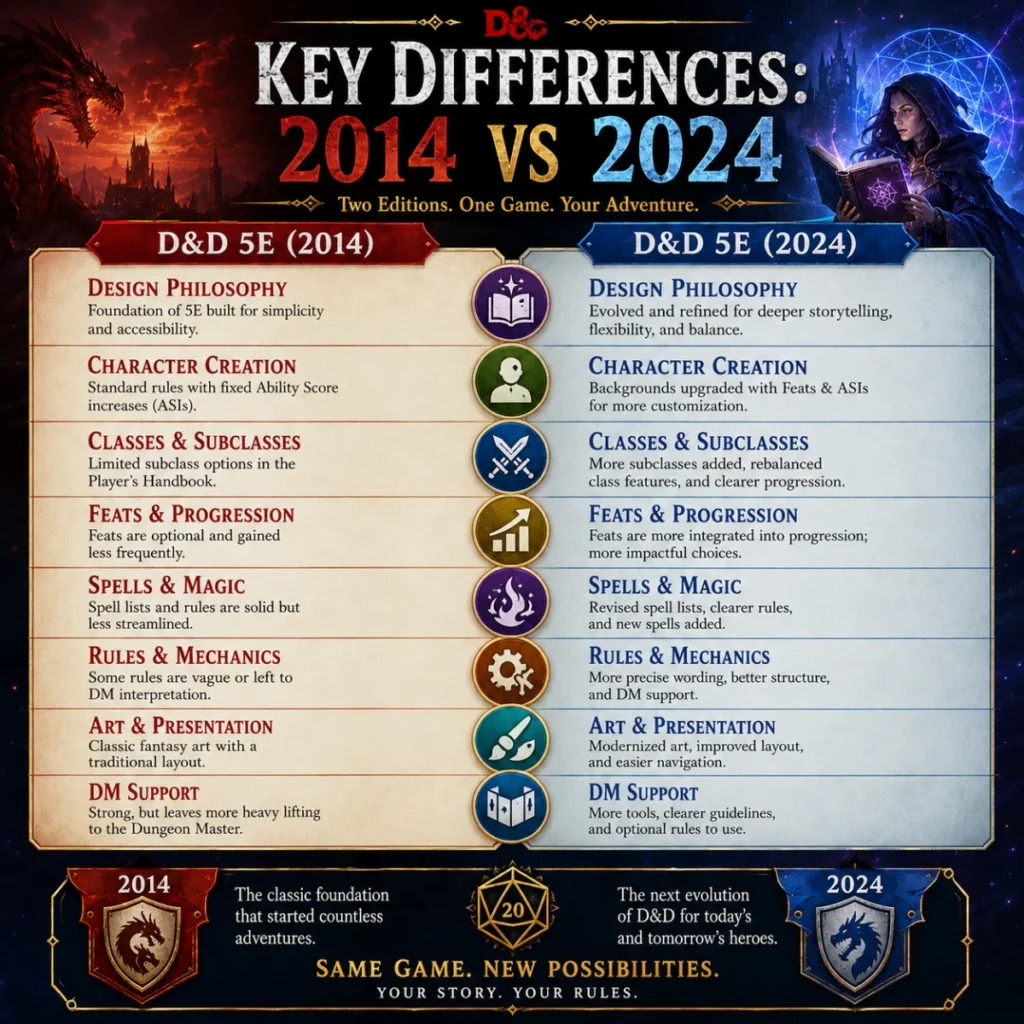
With the release of the 2024 Player’s Handbook, some spells received updates. Message is included in the new edition with a few tweaks.
In the 2014 rules, the spell can travel around corners and through openings. It is blocked by magical silence, 1 foot of stone, 1 inch of metal, thin lead, or 3 feet of wood.
In the 2024 rules, the spell has similar effects with slightly streamlined phrasing. The core mechanics remain the same: whisper a message, target replies, range 120 feet. One notable change is that Druids now have access to Message in the 2024 rules.
Classes That Can Learn Message
Message appears on the spell list of several classes.
Artificer: A utility cantrip perfect for clever inventors and tinkerers.
Bard: Ideal for manipulation, deception, and secret communication during social encounters.
Druid: Available in the 2024 rules for nature-based casters who need subtle communication.
Sorcerer: Great for subtle magical communication without drawing attention.
Wizard: A staple cantrip for studious mages who value information and planning.
Characters who don’t have access to Message can still obtain it through the Magic Initiate feat.
Creative Uses for Message 5e
Message is one of those spells that rewards creativity. Here are some clever ways players have used it.
Stealthy Communication
The most obvious use is sending secret messages to allies during negotiations, heists, or social encounters. The rogue can scout ahead and report back without alerting guards. The party can coordinate attacks without speaking aloud. This allows split parties to stay in touch even when they’re separated.
Cheating at Cards
Whisper the dealer’s hand to a partner. Message doesn’t require line of sight, so you can send information from across the room while appearing perfectly innocent. This makes it a favorite tool for rogues and bards in gambling situations.
Long-Distance Planning
With a 120-foot range, you can communicate with allies who are far apart. This allows split parties to coordinate without shouting or using magic items. It’s especially useful in large dungeons or city environments where staying together isn’t practical.
Threatening from Afar
Whisper a threat to an enemy during a tense standoff. They’ll hear your voice, but no one else will. This can intimidate without starting a fight. It’s a great way to make your presence known without revealing your position.
Cover for Deception
If you’re disguised or hidden, Message lets you speak to someone without revealing your position. The target knows where the voice comes from, but others don’t hear anything. This is perfect for spies, infiltrators, and anyone who needs to stay invisible.
DM Tips for Message
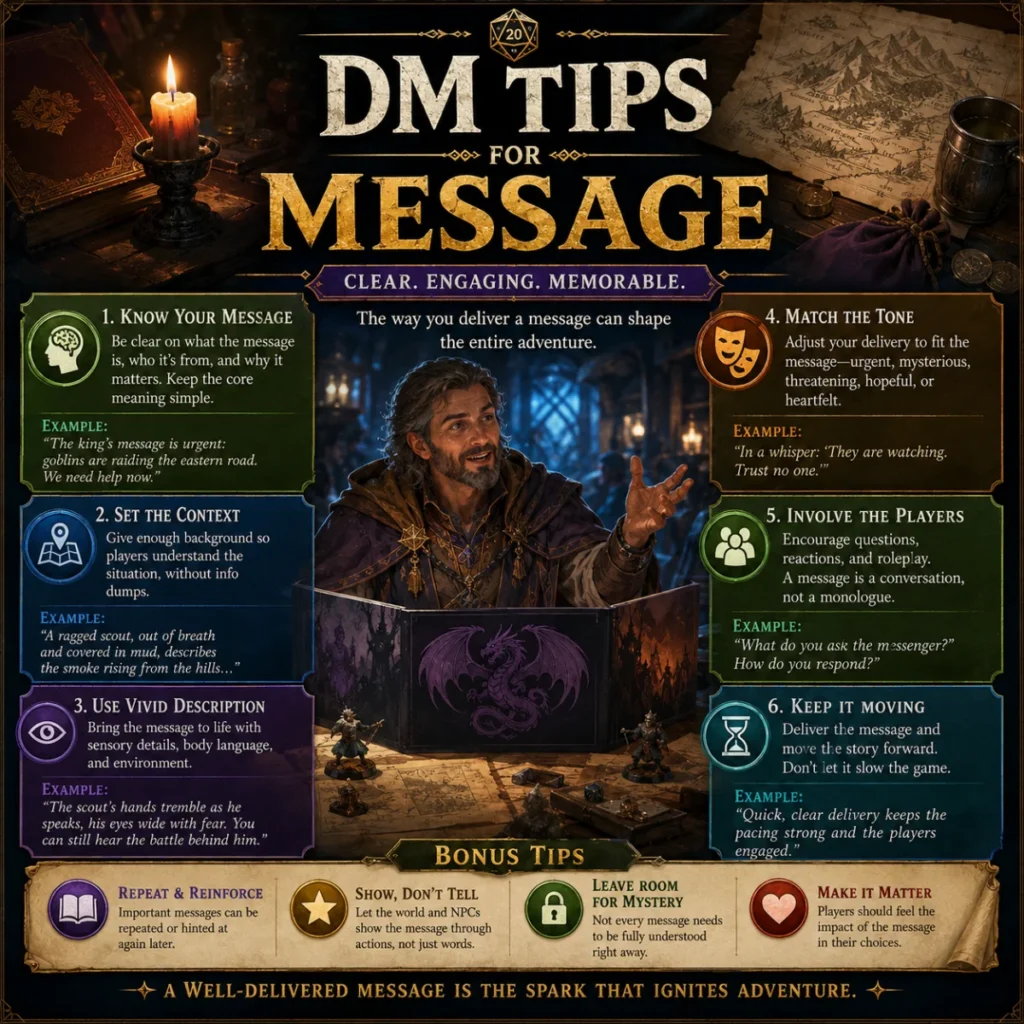
Message is a great spell for DMs to encourage creative problem-solving. However, it’s worth knowing its limits.
It’s not telepathy: The caster still has to whisper aloud, so someone with keen ears or magical detection might notice. Observant NPCs might see your lips moving.
Blocking materials are clear: Lead, stone, and wood block the spell. Use these materials to create secure rooms where communication isn’t possible. This gives you a way to challenge players who rely too heavily on the spell.
Targets know where the message comes from: The spell description implies the target knows the direction of the whisper. They might identify the caster. This can create interesting roleplay moments and consequences.
Silence spells work: Magical silence blocks Message, so a Silence spell can shut down communication entirely. This is a useful tool for enemies who want to prevent the party from coordinating.
FAQs
What level spell is Message in D&D 5e?
Message is a cantrip (0-level spell). It does not cost a spell slot and can be cast as many times as you like.
What is the range of Message 5e?
The spell has a range of 120 feet. This is typically measured from the caster’s position.
What components does Message need?
Message requires Verbal, Somatic, and Material components. You need to whisper, point, and have a short piece of copper wire (or an arcane focus can replace it).
Can Message go through walls?
Yes, but with limitations. It can pass through 3 feet of wood, 1 foot of stone, 1 inch of common metal, or thin sheets of lead. Magical silence also blocks it.
Does Message require concentration?
No, Message does not require concentration. It lasts for 1 round regardless of what else you do.
Who can learn Message?
Artificers, Bards, Sorcerers, and Wizards can learn Message. In the 2024 rules, Druids also gain access to it.
What is the material component for Message?
A short piece of copper wire. An arcane focus or component pouch can replace this.
Conclusion
Message is a subtle but powerful cantrip that rewards clever players. It’s not a flashy spell—it doesn’t deal damage or control crowds—but its ability to enable secret communication can turn the tide of any situation. Whether you’re coordinating a heist, cheating at cards, or delivering a threatening whisper, Message lets you communicate without anyone else knowing.
As with any spell, the key is creativity. Think about how to use Message in ways that surprise your DM and your fellow players. Sometimes the quietest spell is the one that changes everything.

Hamid Mehmood is a passionate content creator dedicated to making words, messages, and online expressions easy to understand. He enjoys creating clear, helpful content that helps readers discover meanings and communicate with confidence.