If you live in Washington state and received a text message inviting you to try Cash App between late 2019 and mid-2025, you might be entitled to a payment. A class-action lawsuit against Cash App’s parent company, Block, has resulted in a $12.5 million settlement over allegations that the company sent unsolicited promotional text messages without proper consent. In December 2025, a federal judge officially approved the settlement, clearing the way for payments to eligible recipients.
The settlement addresses claims that Cash App violated Washington state’s strict anti-spam laws by sending unsolicited referral texts to residents. If you received one of these messages, you could receive between $88 and $147. This guide covers everything you need to know about the Cash App unsolicited text message settlement, from who qualifies to how much you can expect and what other settlements may affect Cash App users.
What Was the Cash App Unsolicited Text Message Lawsuit About?
The lawsuit, formally known as Bottoms v. Block Inc., was filed in November 2023 by Kimberly Bottoms, a resident of Washington state. Bottoms alleged that she received unsolicited text messages from Cash App through the platform’s “Invite Friends” feature, which allowed users to market the app to their contacts in exchange for a $5 referral bonus.
The problem, according to the lawsuit, was that these messages were sent to people without their affirmative consent. The messages typically appeared as if they came from a friend or acquaintance, reading something like: “Hey! I’ve been using Cash App to send money and spend using the Cash Card. Try it using my code and you’ll get $5,” followed by a referral code and a link.
Washington state law specifically prohibits companies from sending spam text messages to residents without their consent. The state’s Commercial Electronic Mail Act (CEMA) was broadened in 2003 to include text messages, and it also covers third parties who “initiate or assist” in transmitting those messages. While Cash App and Block denied any wrongdoing and maintained they had abided by all state and federal laws, they agreed to settle the case to avoid continued litigation.
Who Is Eligible for the Cash App Settlement?
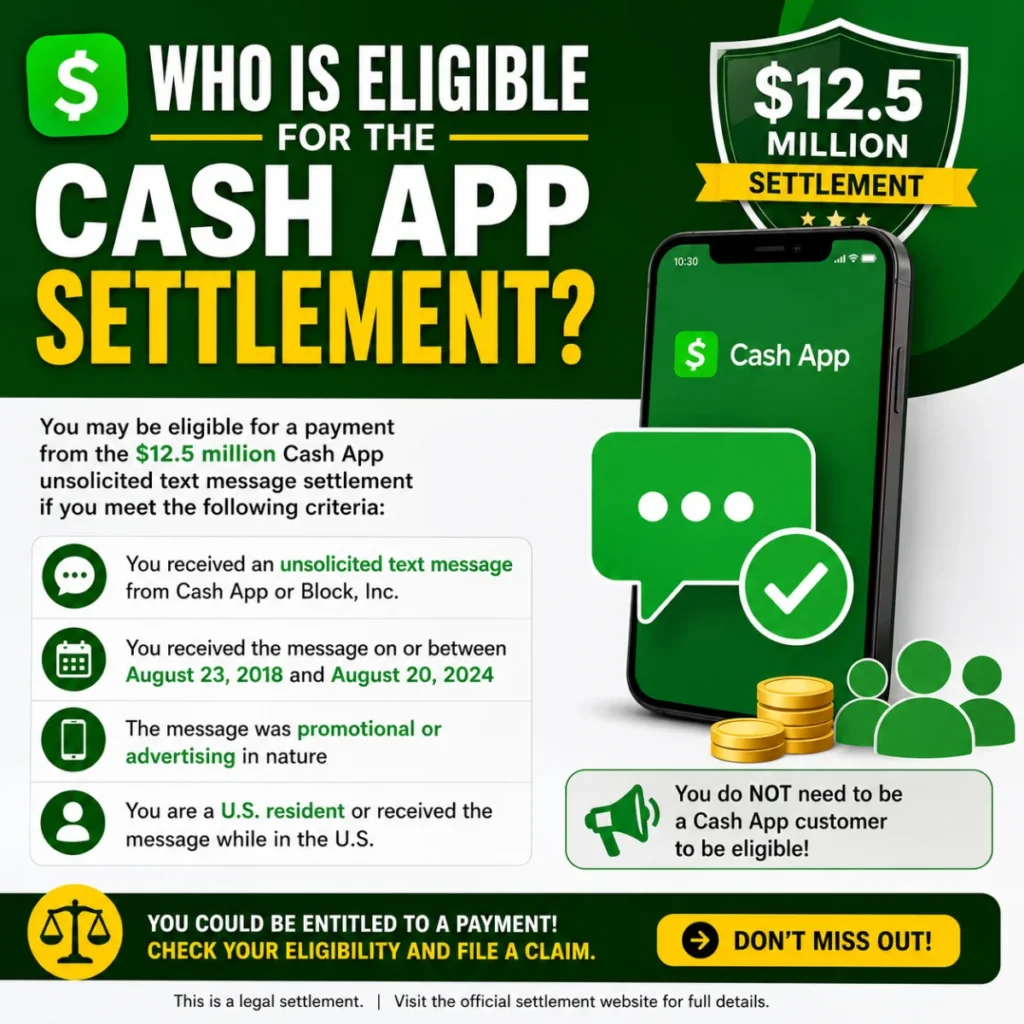
Eligibility for this settlement is limited to a specific group of people. Here are the key criteria you must meet:
- You received an unsolicited text message related to Cash App’s referral program.
- The message was sent between November 14, 2019, and August 7, 2025.
- You were a resident of Washington state at the time you received the message.
- You did not affirmatively consent to receiving such messages.
It’s important to note that this settlement specifically applies to Washington state residents. The class action was made possible because Washington has laws expressly forbidding unsolicited text messages. Unfortunately, if you live outside Washington, you are not eligible for this particular settlement.
How Much Will Eligible Users Receive?
The estimated payout for eligible Washington residents is between $88 and $147 per person. The exact amount depends on how many valid claims were submitted. Lawyers representing the class estimated in September 2025 that each claimant would likely receive between $88 and $147, based on an estimate that no more than 5 percent of the 1,975,187 class members in Washington would submit valid claims.
From the total $12.5 million settlement fund, $3.1 million was awarded for attorney fees, and $10,000 was awarded to the class representative, Kimberly Bottoms. The remaining approximately $8.7 million will be distributed among class members who filed valid claims by the deadline.
Important Deadlines and Claim Process
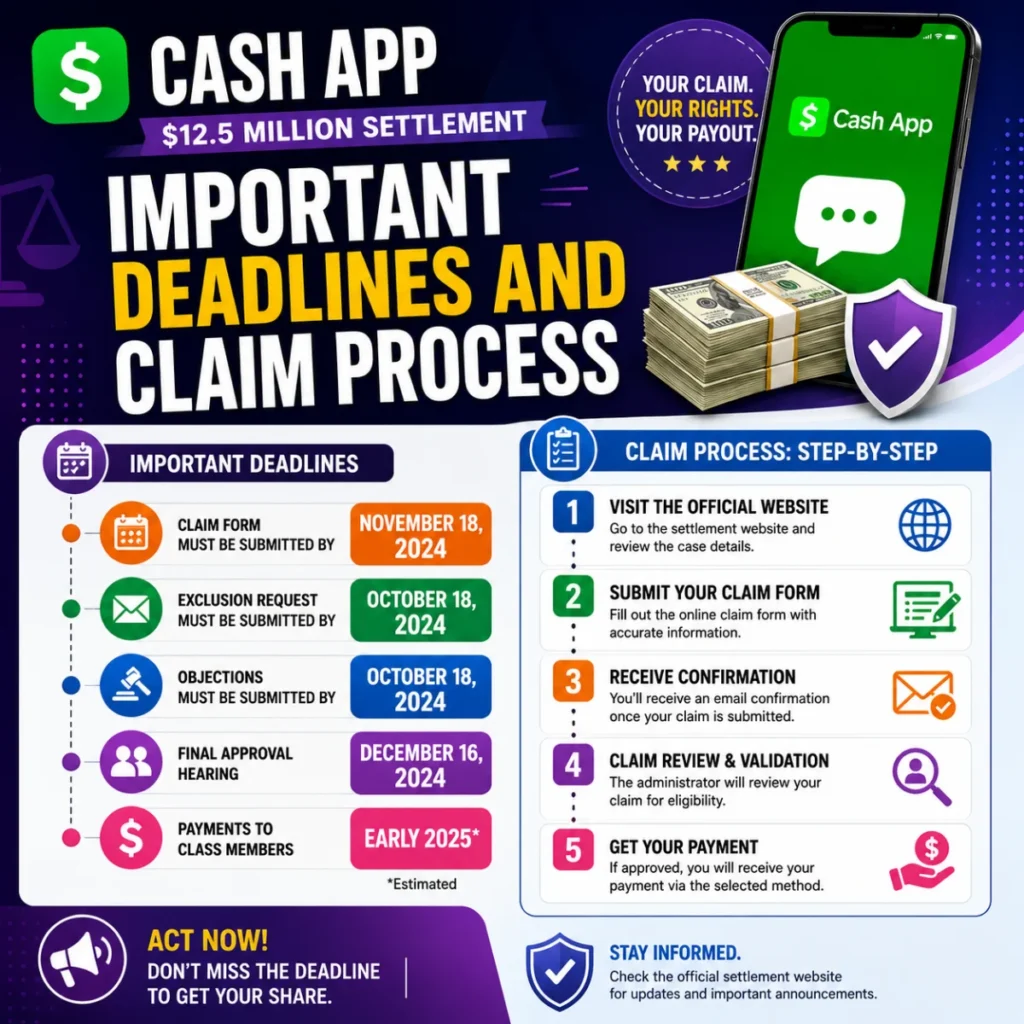
The deadline to file a claim was October 27, 2025. If you did not submit a claim by this date, you are no longer eligible to participate in this settlement. The settlement was granted final approval by U.S. District Judge John Chun in Seattle on December 2, 2025, who deemed the agreement “fair, reasonable, and adequate and in the best interests of the Settlement Class.”
If you did file a claim by the deadline, payments are now being processed. The exact date for distribution has not been announced, but the settlement website indicated that distribution would begin in accordance with the settlement agreement following the December 2 approval.
How to File a Claim
If you were eligible and submitted a claim before the deadline, here’s what you needed to do:
- Visit the official settlement website.
- Fill out the claim form with your personal information.
- Provide details about the unsolicited text message you received.
- Submit the form before the October 27, 2025 deadline.
If you missed the deadline, you are no longer eligible to receive payment from this settlement.
Why You Should Have Filed a Claim
A class action settlement only pays out to individuals who submit valid claims. If you didn’t file, you won’t receive any money. It’s also important to note that by not filing a claim, you may have lost your right to sue Cash App separately over the same issue.
Cash App’s Other Settlements: $45 Million Multistate Agreement
The unsolicited text message settlement is just one of several legal actions Cash App and Block have faced in recent years. A much larger $45 million settlement was announced in July 2026, involving 46 states.
Unlike the text message settlement, this multistate agreement does not include direct payments to customers. The investigation, led by Oregon and Texas, concluded that Block rapidly expanded Cash App’s user base while fraud became a growing problem, leaving many customers unable to get meaningful help after their accounts were compromised.
Key Findings of the Multistate Investigation
- Misleading Security Promises: Block repeatedly assured users their money was safe on Cash App in ways that suggested protections similar to traditional banks, despite knowing fraud on the platform was increasing.
- Weak Identity Verification: The company favored a quick, low-friction sign-up process with limited identity verification, making it easier for scammers to open accounts.
- Lack of Customer Support: For years, Cash App lacked telephone customer support. Users locked out of their accounts often searched online for a support number, only to reach fake customer service lines run by scammers.
- Exploitation of Promotions: “Cash App Fridays,” a promotion encouraging users to post their $cashtags, was exploited by scammers who contacted participants claiming they had won prizes.
What Changes Cash App Must Make
Under the $45 million settlement, Block agreed to make significant changes, including:
- Maintaining customer support capable of resolving fraud complaints and account lockouts.
- Providing live phone assistance for at least 13.5 hours daily.
- Providing live chat support for at least 18 hours daily.
- Stopping misleading claims about Cash App’s security.
- Educating users about common scams.
Hawaii, Missouri, South Carolina, and Wyoming did not participate in this multistate settlement.
Consumer Financial Protection Bureau Settlement
A separate action by the Consumer Financial Protection Bureau (CFPB) accused Block of failing to properly investigate fraud reports and provide adequate customer service. Under that agreement, Block agreed to distribute between $75 million and $120 million to consumers nationwide, pay civil penalties, and adopt additional reforms.
Eligible consumers do not need to submit a claim for this settlement; they will receive a notice by mail with a settlement check.
Common Mistakes to Avoid with Class Action Settlements
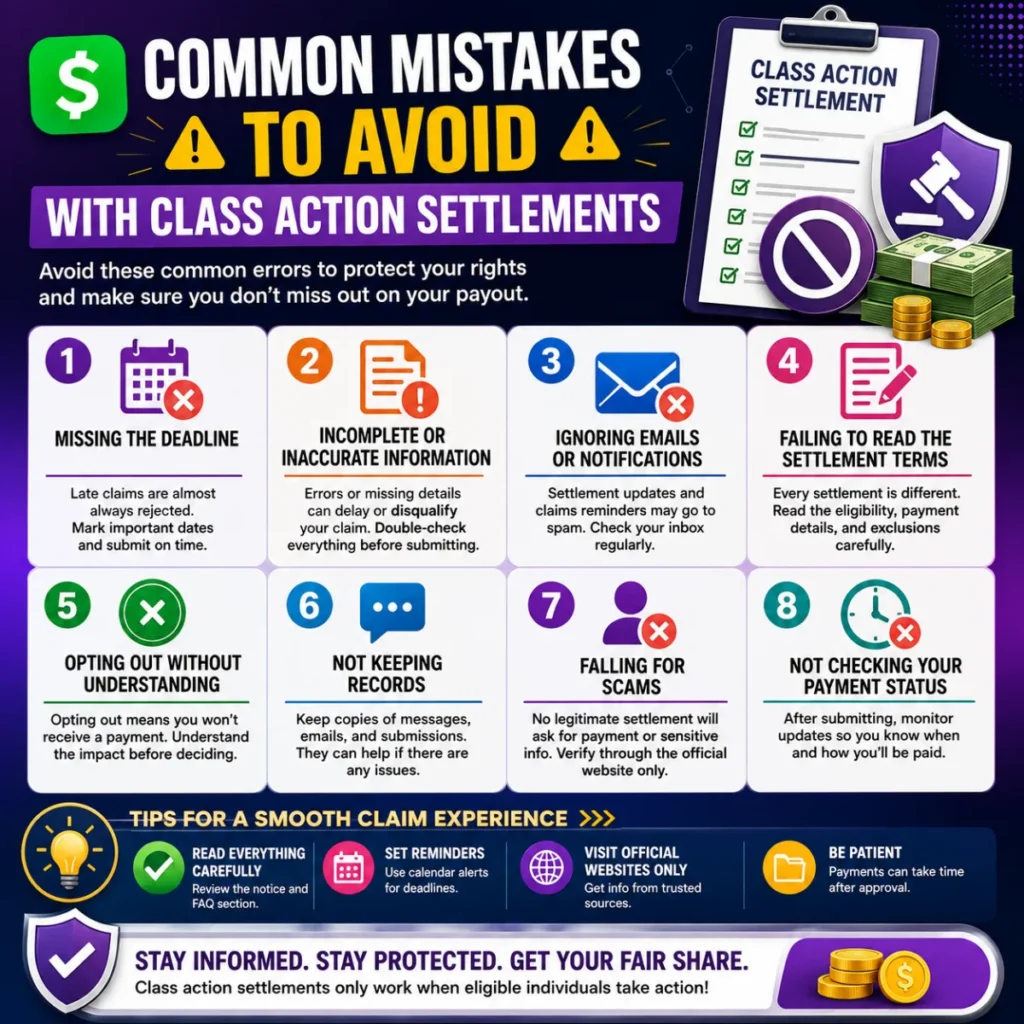
If you’re dealing with any class action settlement, here are common mistakes to avoid:
Missing the Deadline
The most common reason people don’t get paid is that they miss the claim filing deadline. Always mark the deadline on your calendar and file early.
Not Reading the Fine Print
Many settlements require you to provide specific information. Read the instructions carefully to ensure your claim is valid.
Assuming You’re Not Eligible
Many people assume they don’t qualify for class action settlements. If you received a notice, you likely qualify. Always read the notice carefully.
Throwing Away Settlement Notices
Settlement notices often come in the mail and look like junk mail. Don’t throw them away without reading them first.
FAQs
Who is eligible for the Cash App text message settlement?
Eligible individuals are Washington state residents who received a Cash App referral text message between November 14, 2019, and August 7, 2025, without providing affirmative consent.
How much can I receive from the Cash App text message settlement?
Eligible claimants can expect to receive between $88 and $147. The final amount depends on how many valid claims were approved.
Is the deadline to file a claim still open?
No. The deadline to file a claim for the unsolicited text message settlement was October 27, 2025. If you missed it, you are no longer eligible.
Am I eligible if I live outside Washington state?
No. This specific settlement applies only to Washington state residents. Washington’s strict anti-spam laws were the basis for the lawsuit.
Does the $45 million multistate settlement include payments to customers?
No. The $45 million settlement with 46 states does not include direct payments to customers. It requires Cash App to improve fraud protection and customer service practices.
How can I receive payment from the CFPB settlement?
Eligible consumers for the CFPB settlement will receive a notice by mail with a settlement check and do not need to submit a claim.
What changes is Cash App required to make under the settlements?
Cash App must maintain robust customer support, provide live phone and chat assistance, stop misleading security claims, and investigate and reimburse unauthorized transactions as required by law.
How do I check the status of my claim?
You can check the status of your claim on the official settlement website. If you haven’t received payment yet, be patient—distribution can take several months after final approval.
What if I received multiple unsolicited texts?
You can still only file one claim per person. The settlement compensates individuals, not per text message received.
Why did this settlement only apply to Washington state?
Washington has one of the strictest anti-spam laws in the country. The lawsuit was filed there because Washington’s law explicitly prohibits unsolicited commercial text messages.
Conclusion
The Cash App unsolicited text message settlement represents an important victory for consumer privacy rights in Washington state. With final approval granted in December 2025, eligible individuals who filed claims by the October 27 deadline can expect payments between $88 and $147. This settlement, combined with the $45 million multistate agreement and the CFPB settlement, reflects a broader push to hold Cash App accountable for its marketing practices, security measures, and customer support standards.
If you believe you may be eligible for any of these settlements, it’s essential to stay informed about your rights and any future developments. Moving forward, Cash App users should be more aware of their rights when it comes to unsolicited messages. If you receive unwanted promotional texts in the future, you may have legal options. Always read the terms and conditions carefully before agreeing to receive communications from any platform, and know that Washington state law provides strong protections against spam.

Hamid Mehmood is a passionate content creator dedicated to making words, messages, and online expressions easy to understand. He enjoys creating clear, helpful content that helps readers discover meanings and communicate with confidence.