
Finding the right words to write in a sympathy card can feel overwhelming. You want to offer comfort, but the fear of saying the wrong thing often leads to saying nothing at all. The truth is, you don’t need perfect words—you just need honest, gentle ones .
A thoughtful sympathy card message can genuinely comfort someone during one of life’s hardest moments. Even a short, sincere note lets the grieving person know they’re not alone . This guide provides examples for every situation, helping you find words that feel authentic and supportive.
What Makes a Good Sympathy Card Message?
A meaningful sympathy message doesn’t need to be long or poetic—just sincere . The most effective messages follow a simple structure: start with a greeting or expression of condolence, share a memory or personal thought if appropriate, and offer support if you’re able .
Key Principles to Remember
- Keep it brief — A few sincere sentences are often more meaningful than a long message
- Use the person’s name — Mentioning the deceased by name adds warmth and a personal touch
- Avoid clichés — Phrases like “they’re in a better place” can hurt unless you’re certain the person finds comfort in them
- Offer specific help — “I’ll drop dinner off Thursday” is more helpful than “Let me know if you need anything”
Short Sympathy Card Messages
These brief messages work for cards, texts, or when you want something simple :
- “I’m so sorry for your loss.”
- “Thinking of you and your family.”
- “With heartfelt condolences.”
- “Holding you in my thoughts during this time.”
- “Wishing you peace and comfort in the days ahead.”
- “I’m here for you, now and always.”
- “With love and sympathy.”
- “Sending love to you all.”
- “No words. So sorry.”
- “Here for you, always.”
Messages by Relationship

For a Close Friend
When writing to a friend, you can be more personal. Keep it gentle and real :
- “I love you. I’m so sorry. I’m here for you.”
- “I can’t imagine how hard this is. I’m thinking of you every day.”
- “I’m so sorry you’re going through this. I’m holding you close in my thoughts.”
- “I wish I could take some of this weight from you. I’m here, always.”
When You Knew the Deceased
Sharing a specific memory can mean a great deal:
- “[Name] was one of the kindest people I’ve known, and I will miss them. I’m so sorry for your loss.”
- “I’ll always remember [name]’s warmth and their wonderful sense of humour. They made the world brighter.”
- “I feel so lucky to have known [name]. Their memory will stay with me. Thinking of you all.”
- “I’ll never forget the way [Name] made me feel. What a gift they were.”
For a Coworker
Keep the tone respectful, supportive, and simple :
- “Please accept my sincere condolences.”
- “Thinking of you during this difficult time.”
- “Wishing you strength and comfort in the days ahead.”
- “On behalf of all of us, our deepest condolences. We’re here to support you however we can.”
- “Please don’t worry about anything here. Our thoughts are with you and your loved ones.”
Messages for Specific Losses
Loss of a Mother
- “I’m so sorry for the loss of your mother. Thinking of you with love.”
- “May her memory bring you comfort.”
- “I have such fond memories of your mom. She was a truly special person.”
Loss of a Father
- “I’m so sorry for the loss of your father. Wishing you strength and peace.”
- “Thinking of you as you remember your dad. I’m here whenever you need.”
- “Your father was a genuinely kind man.”
Spouse Loss
- “I was so sorry to hear of your loss. Remembering your great love story today and always.”
- “A lifetime together is never long enough. Holding you in my heart.”
- “I know your love will always continue, even though you are parted.”
Loss of a Child
- “I am heartbroken for you. Please know you’re not alone in this grief.”
- “Your child brought so much light into the world. I’ll always remember them.”
- “There are no words. Just my love and deepest sympathy.”
Pregnancy or Infant Loss
- “There are no words for a loss like this. Just deep, quiet care.”
- “Your grief is real, and so is the love you hold.”
- “The love you felt for your baby-to-be was real, and so is the loss you’re experiencing.”
Loss of a Pet
- “I’m so sorry about your sweet [pet’s name]. They were deeply loved.”
- “Thinking of you as you grieve. [Pet’s name] was lucky to have you.”
- “I know how much [pet’s name] meant to you. Sending love and comfort.”
Messages for Sympathy Cards with Flowers
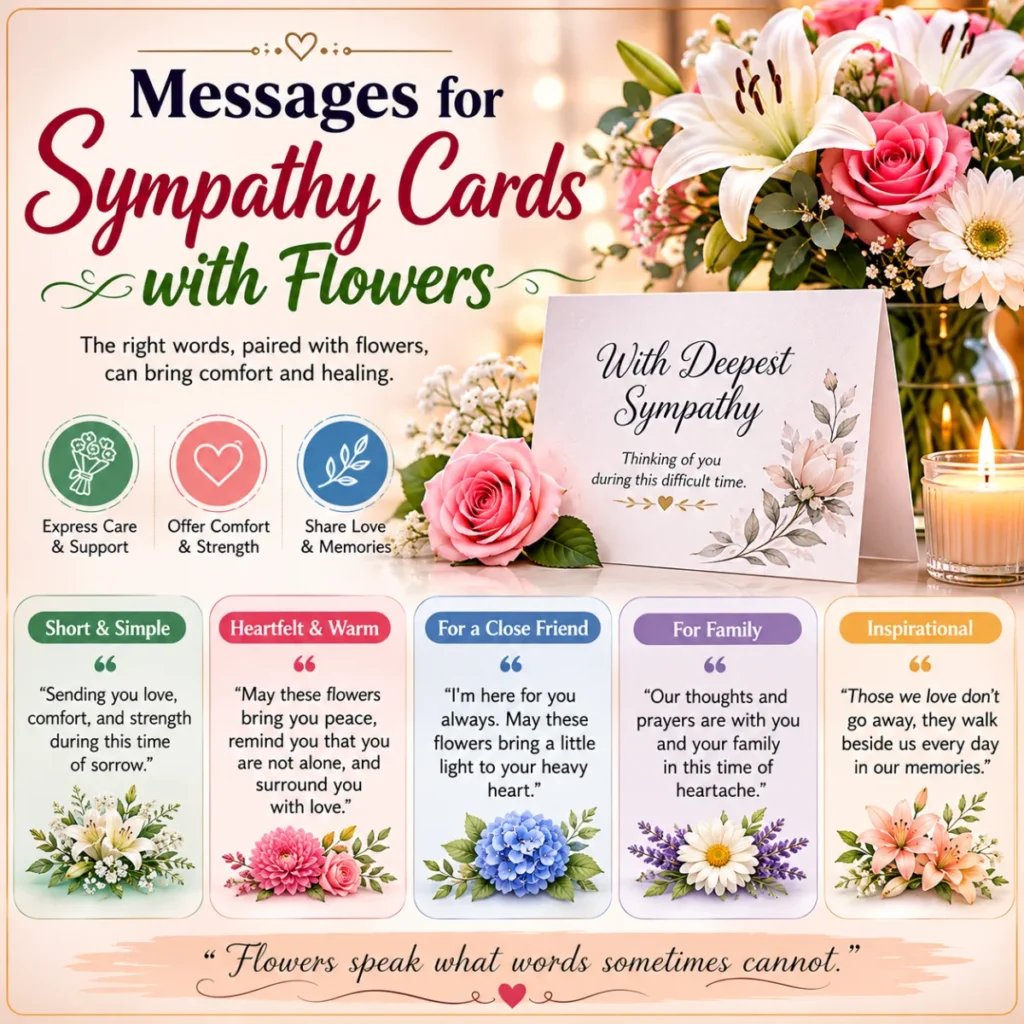
When sending flowers, a short message on the card expresses your sympathy:
- “May these flowers express what words never could. Sending you my deepest sympathies.”
- “I hope you find these flowers as beautiful as [name’s] spirit and know I’m thinking of you in this sad time.”
- “In loving memory of a wonderful person.”
- “Forever in our hearts.”
- “With love from all of us.”
What to Avoid in a Sympathy Card
Certain well-intentioned phrases can cause more pain :
Avoid trying to explain the loss: “Everything happens for a reason” or “they’re in a better place” can hurt, even when kindly meant. Simple sympathy is safer and kinder .
Don’t compare grief: “I know exactly how you feel” rarely lands. “I can’t imagine how hard this is” acknowledges their loss without claiming it .
Offer specific help, not a vague open door: “Let me know if you need anything” puts the work on them. “I’ll drop dinner round on Thursday” is a kindness they can simply accept .
FAQs
What should I write in a sympathy card?
Keep it short and sincere. Acknowledge the loss, say something true about the person if you knew them, and let the family know you’re thinking of them. A simple “I’m so sorry for your loss. Thinking of you” is perfectly appropriate .
What if I didn’t know the deceased well?
Focus your message on the person you’re writing to. You can say something like, “I didn’t have the privilege of knowing [Name], but I know how much they meant to you, and my heart goes out to you.” A simple acknowledgment of their loss is enough .
Is it better to send a card or say nothing?
Almost always, send the card. Grieving people often feel isolated when others avoid the topic. Even a brief acknowledgment can offer comfort . The effort of reaching out matters more than finding perfect words.
How soon should I send a sympathy card?
Send your sympathy card within a week or two of learning about the loss. If you’re unsure whether to send one, err on the side of sending—receiving a simple card is never unwelcome during grief .
Should I include a religious message?
Only if you’re certain the recipient would find comfort in it. Religious messages that don’t match the person’s beliefs can feel empty or even hurtful. Simple, universal sympathy is always appropriate .
Conclusion
Writing a sympathy card message doesn’t require eloquence—it requires sincerity. A short note that comes from the heart will be appreciated more than a lengthy one that feels forced. Your effort to reach out and show support is what truly counts.
Remember that grief is deeply personal, and there is no single “right” way to offer comfort. What matters is that you try, that you show up, and that you let the person know they are not alone. Even a few kind words can make a real difference to someone navigating loss.

Hamid Mehmood is a passionate content creator dedicated to making words, messages, and online expressions easy to understand. He enjoys creating clear, helpful content that helps readers discover meanings and communicate with confidence.