Spelling trips up many people, even with common words. “Message” appears constantly in texts, emails, and everyday writing. Yet its spelling confuses many people. Getting it right matters more than you might think. A simple spelling error can make your writing look careless and unprofessional.
Fortunately, spelling “message” correctly is easy once you know the pattern. The word has 7 letters and follows a simple rule. This guide shows you exactly how to spell “message,” explains its different forms, and highlights common mistakes to avoid. You’ll never second-guess this word again.
How to Spell “Message” Correctly
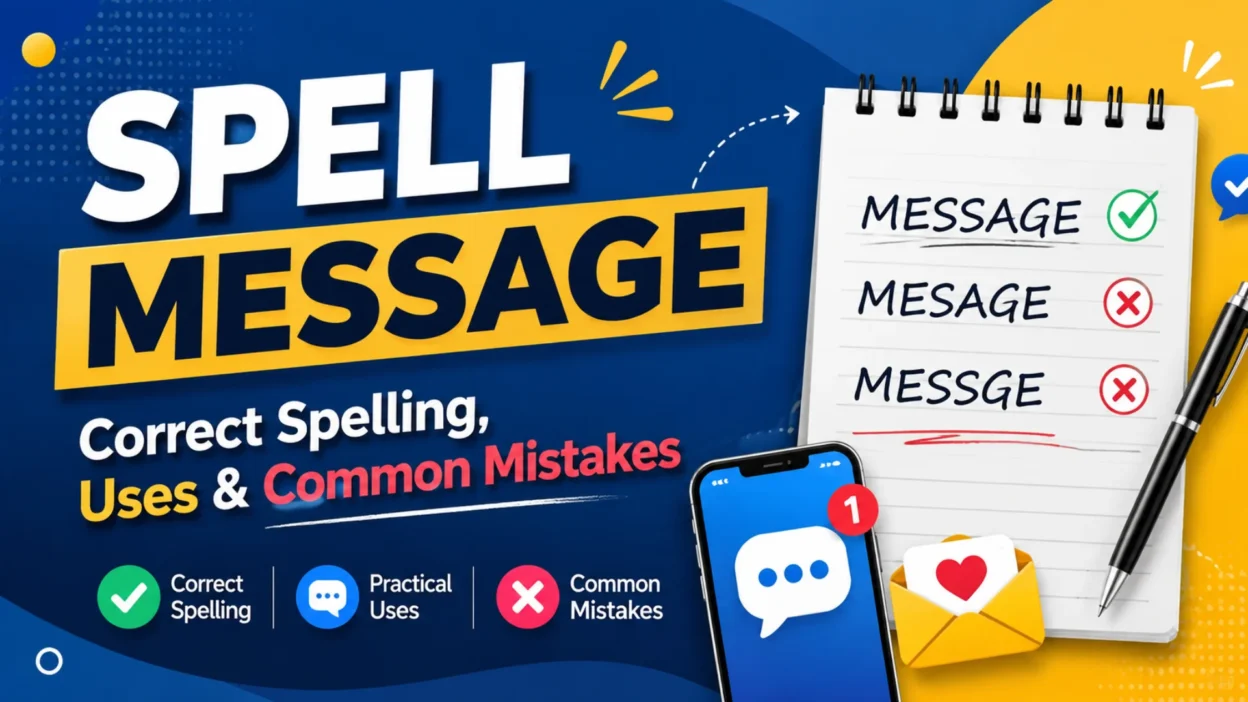
The correct spelling is M-E-S-S-A-G-E. It has two “s”s and one “g.” The word contains 4 consonants and 3 vowels.
Common Misspellings to Avoid
People frequently misspell “message” in a few predictable ways:
- “Messege” — People often use “e” instead of “a” after the “g”
- “Massage” — This means a therapeutic treatment, not communication
- “Mesage” — Many people forget the second “s”
The easiest way to remember the correct spelling? Think of the word as “mess” + “age.” If you can spell “mess,” you can spell “message.” The double “s” stays, and the word ends with “-age” like “package” or “sausage.”
How to Pronounce “Message”
“Message” sounds like MESS-ij in both American and British English. The stress falls on the first syllable. The second syllable rhymes with “edge.”
What Does “Message” Mean?
Using “Message” as a Noun
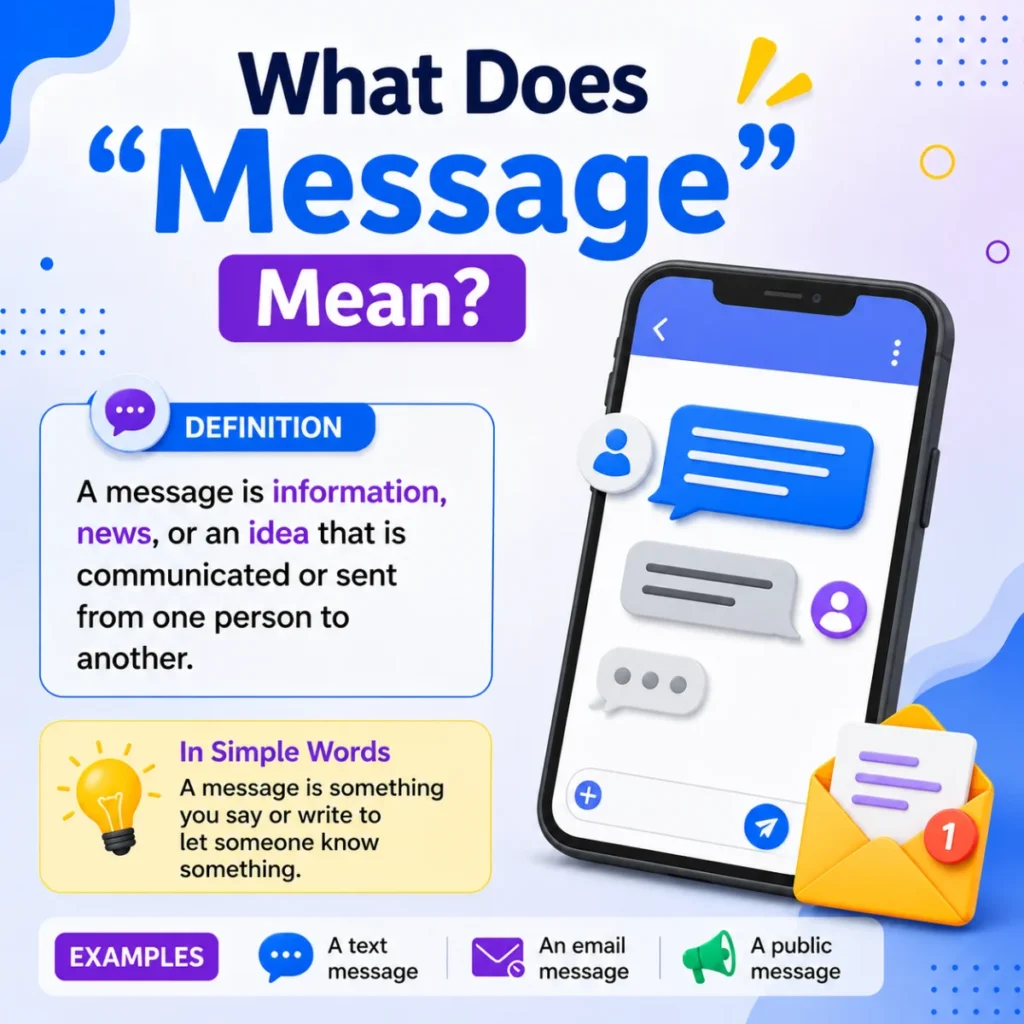
A “message” is any piece of communication sent from one person to another. It can be written, spoken, or recorded. The Oxford Advanced American Dictionary defines it as a communication sent using a computer or other electronic device.
Here are some examples:
- “I left a message on your voicemail.”
- “She sent me a text message.”
- “The president delivered a message to the nation.”
Using “Message” as a Verb
You can also use “message” as a verb meaning to send someone a message electronically. The verb forms include:
- Message — I message you every day
- Messages — He messages his friends constantly
- Messaged — She messaged me yesterday
- Messaging — They are messaging right now
Here are some examples in sentences:
- “Faith just messaged me.”
- “Brian messaged me the news.”
- “She messaged the committee with the update.”
Other Meanings of “Message”
“Message” can also mean an underlying meaning or moral. For instance, “The movie’s message was about the importance of family.” In British English, “running messages” means running errands. The word can also refer to a prophetic or divine communication, as in the biblical reference, “I have a message from God unto thee.”
Common Spelling Mistakes and How to Fix Them
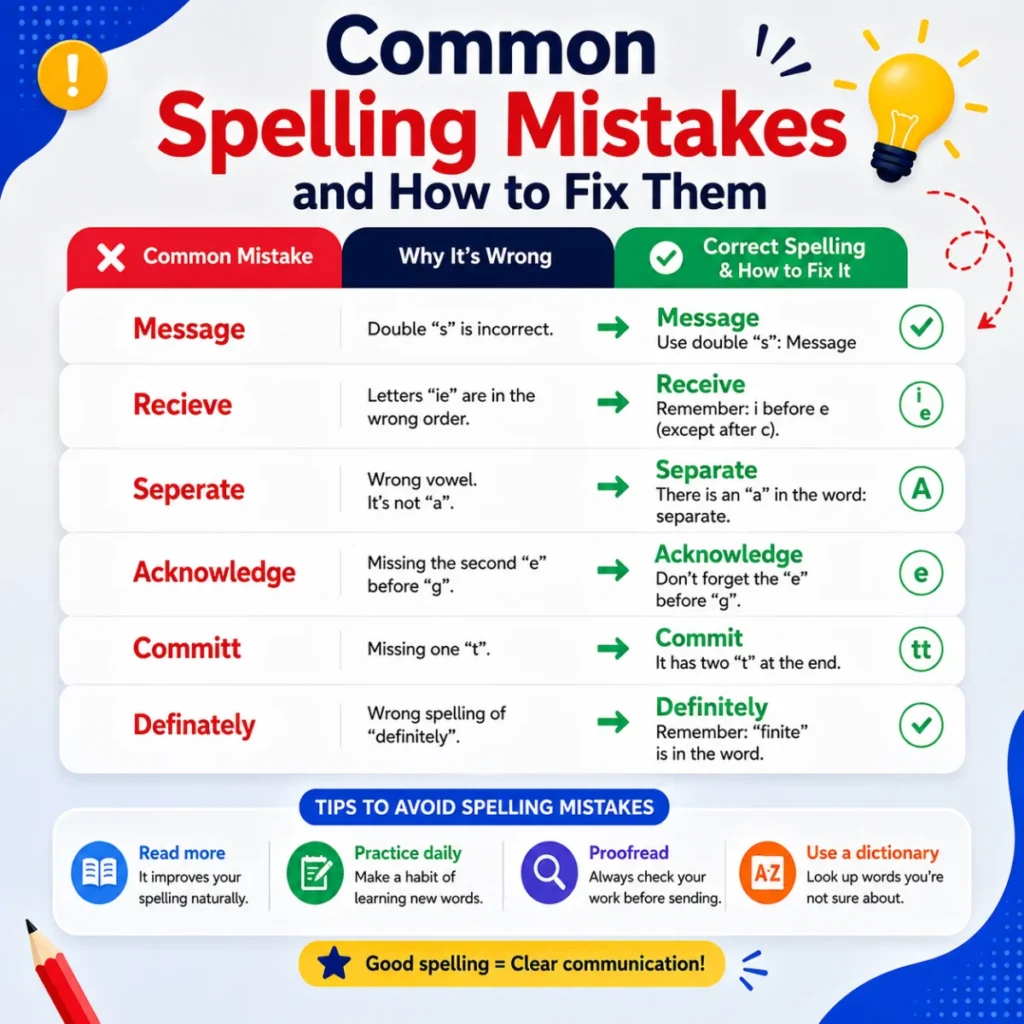
Mistake 1: Confusing “Message” with “Massage”
“Massage” means a therapeutic treatment. People confuse these words because they look and sound similar. Remember: a message communicates information. A massage relaxes your muscles. One involves words, the other involves touch.
Mistake 2: Forgetting the Double “S”
Writing “mesage” with one “s” is a frequent error. People simply don’t realize there are two “s”s. Break the word into “mess” + “age.” If you remember “mess,” you’ll never forget the double “s.”
Mistake 3: Using the Wrong Ending
Some people write “messege” instead of “message.” The correct spelling uses “a” after the “g,” not “e.” The word ends with “-age,” just like “package” or “sausage.”
How to Use “Message” in Digital Communication
Spell Check Tools Can Help
Most digital platforms include built-in spell check features. In older email systems like MM, the command SPELL checked spelling in messages. Today, email clients and messaging apps automatically highlight misspelled words. In Linux systems, users can use M-x ispell-message in Emacs to check spelling in draft messages.
Smart Shortcuts for Texting
When writing text messages, people often use abbreviations and shortcuts. The iPhone’s text replacement feature lets users program a single letter to trigger a prewritten message. This works well for quick responses like “Driving. Call in a sec” or “Thanks so much. I’ll look this over and get back to you.” These shortcuts help you avoid spelling errors by using pre-saved, correctly spelled responses.
The “Message” Spell: A Unique Usage
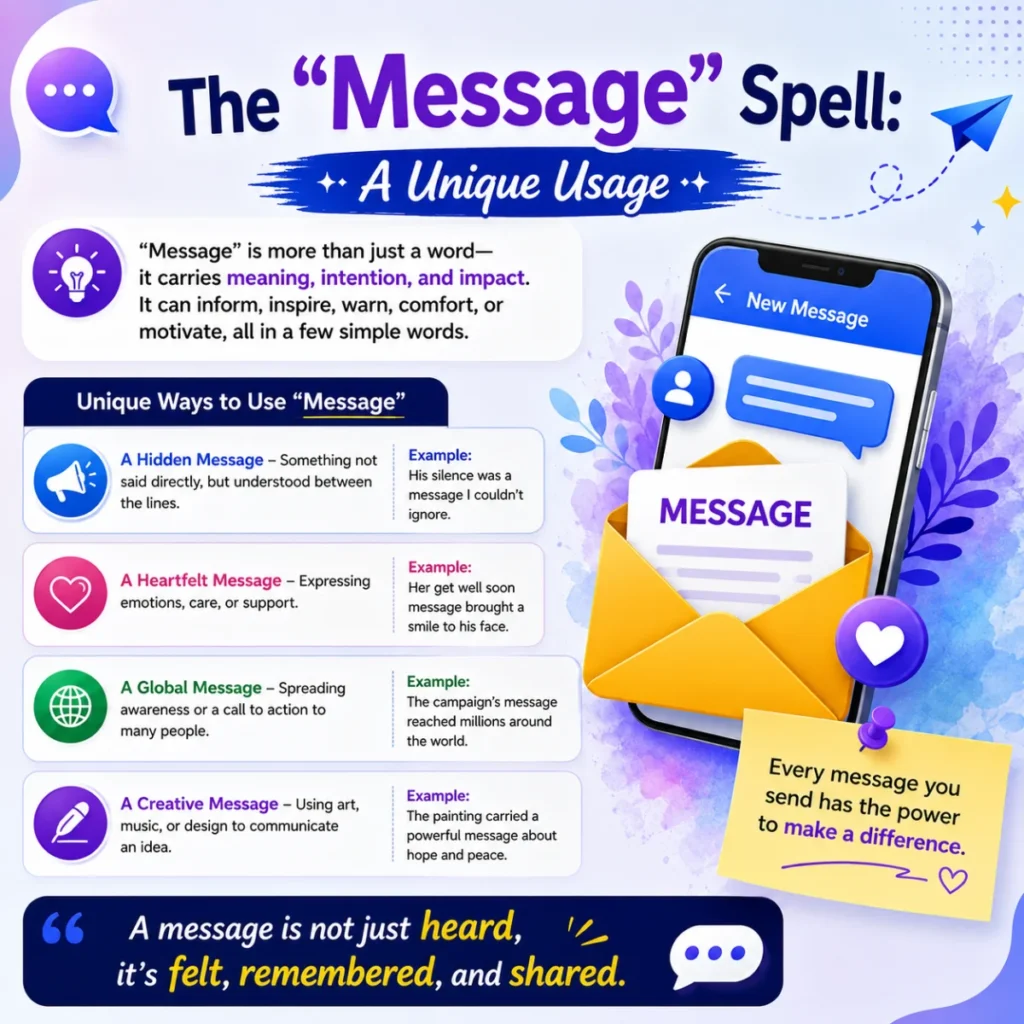
The word “spell” has another meaning beyond letter-by-letter spelling. In some contexts, “spell message” refers to a magical incantation or wish communicated via text.
The Text Message Wish Spell
Some people send a wish to themselves via text message. Here’s how it works:
- Create a new message and address it to yourself
- Type your wish in present tense, like “My hair is amazing today”
- Send the message and go back to your home screen
- Do NOT open the message when you receive it—leave it unread
- When the wish comes true, you can finally view and delete the message
This practice treats the message itself as a form of intention-setting. The unread notification serves as a constant reminder of your wish.
The D&D Message Cantrip
In Dungeons & Dragons, “Message” is a cantrip spell. The spell lets you point toward a creature within 120 feet and whisper a message. Only the target hears the message and can reply in a whisper that only you can hear.
The Message spell requires a casting time of 1 action, a range of 120 feet, components including a copper wire, and a duration of 1 round. You can cast this spell through solid objects if you know the target and know it is beyond the barrier. However, magical silence, 1 foot of stone, metal, or wood, or a thin sheet of lead blocks the spell.
Spelling “Message” in Different Languages
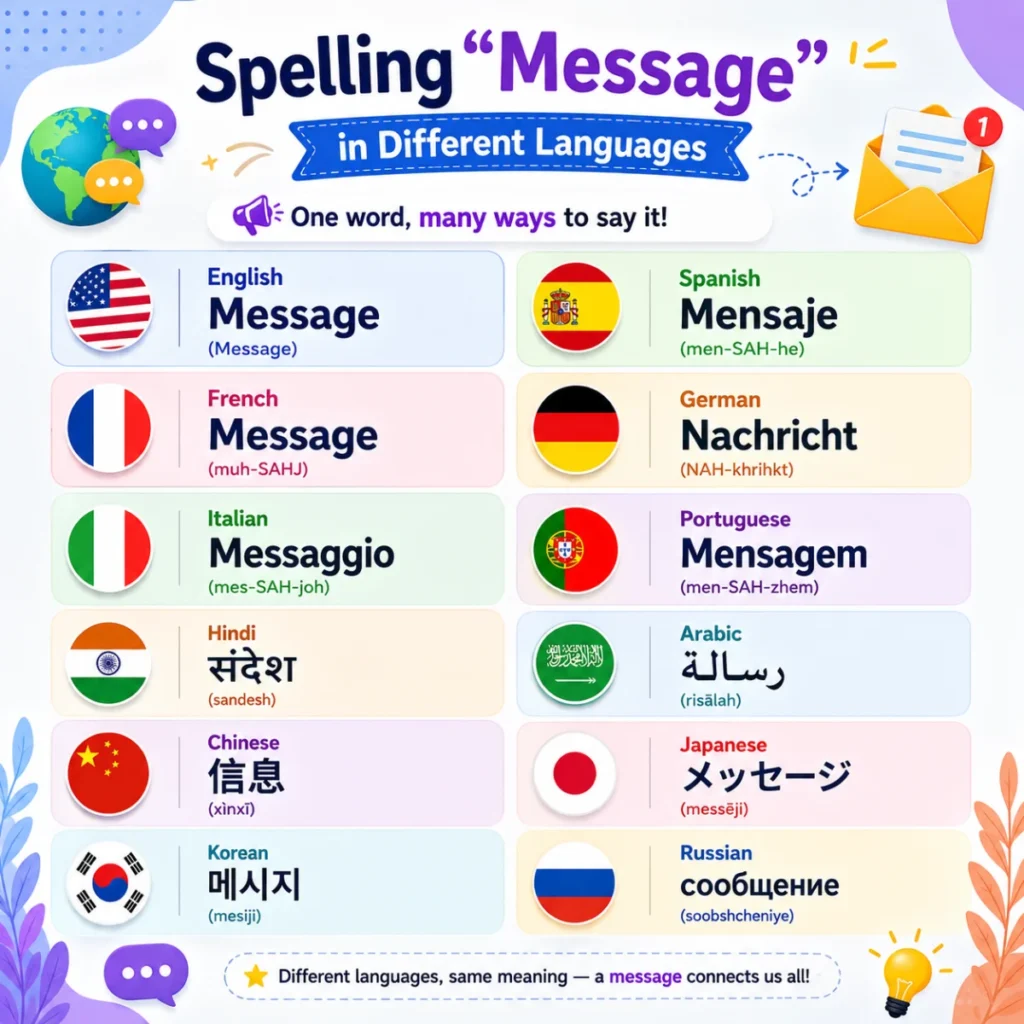
French spells “message” the same way as English. Spanish uses mensaje. Italian uses messaggio. “Message” maintains the same spelling in both British and American English. The verb forms follow the same pattern in both dialects. The Oxford Advanced American Dictionary and Oxford Advanced Learner’s Dictionary both show the same spelling.
FAQs
How do you spell “message” correctly?
“Message” spells M-E-S-S-A-G-E. It has 7 letters with two “s”s in the middle and one “g” after the “a.”
What is the most common misspelling of “message”?
The most common misspellings are “messege” (using “e” instead of “a” after the “g”) and “mesage” (missing one of the double “s”s).
Is “message” spelled with one “s” or two?
“Message” uses two “s”s: mess + age. The double “s” sits in the middle of the word.
What is the plural of “message”?
The plural is “messages.” Simply add an “s” at the end.
Can “message” be used as a verb?
Yes, “message” works as a verb. The forms are message, messages, messaged, and messaging. For example, “She messaged me yesterday.”
What is the pronunciation of “message”?
“Message” sounds like /ˈmɛsɪdʒ/ (MESS-ij). The stress falls on the first syllable.
Is “message” spelled differently in British English?
No, “message” has the same spelling in both British and American English. However, in British English, the word can also mean an errand.
Conclusion
Spelling “message” correctly comes down to one simple rule: M-E-S-S-A-G-E. Remember the double “s” and the “-age” ending. Think of it as “mess” + “age,” and you’ll never make a mistake again.
This word appears everywhere—in texts, emails, professional documents, and even fantasy games. Mastering its spelling helps you communicate clearly and professionally. Now you know the correct spelling, the common mistakes to avoid, and the different ways to use “message.” Put this knowledge to use and write with confidence.

Hamid Mehmood is a passionate content creator dedicated to making words, messages, and online expressions easy to understand. He enjoys creating clear, helpful content that helps readers discover meanings and communicate with confidence.